A Business-Casual Capsule That Works in a Real Office
Business casual" covers everything from a polo to a soft blazer. Here is how to read your office, then build ten pieces that satisfy it without a suit.
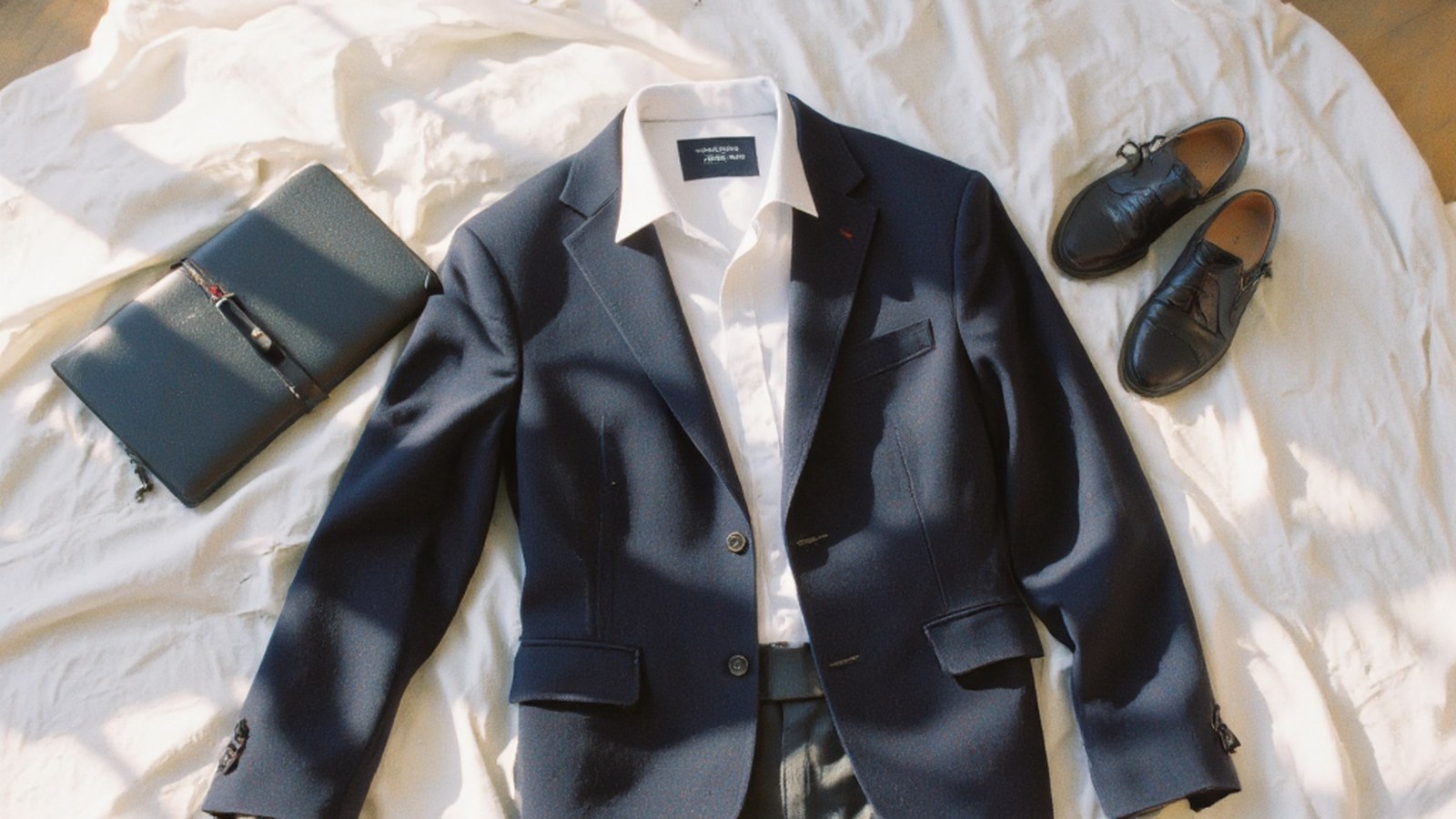
"Business casual" is the least useful dress code in existence. It can mean a suit without a tie, chinos and a polo, or a silk shirt and trainers, depending on the building. The code is not written down anywhere, which is why the fastest way to get it right is to look around rather than look it up.
That said, the range is narrower than it feels. Most offices sit in one of three bands, and each has a small number of reliable answers.
Read your office in one week
Before buying anything, spend a week noticing three people: the most senior person, the best-dressed person at your level, and the person whose job is closest to yours.
- The senior person tells you the ceiling. If they wear a blazer every day, a blazer is safe.
- The best-dressed peer tells you the ceiling you can get away with.
- The closest colleague tells you the floor — what is normal, not remarkable.
If you are new or remote, ask your manager one direct question: "What does the team normally wear for client meetings?" It is a normal question and it saves a year of guessing.
The three bands
| Band | Typical uniform | Safe pieces |
|---|---|---|
| Conservative | Suit, no tie; or blazer + trousers | Wool trousers, blazer, shirt, leather shoes |
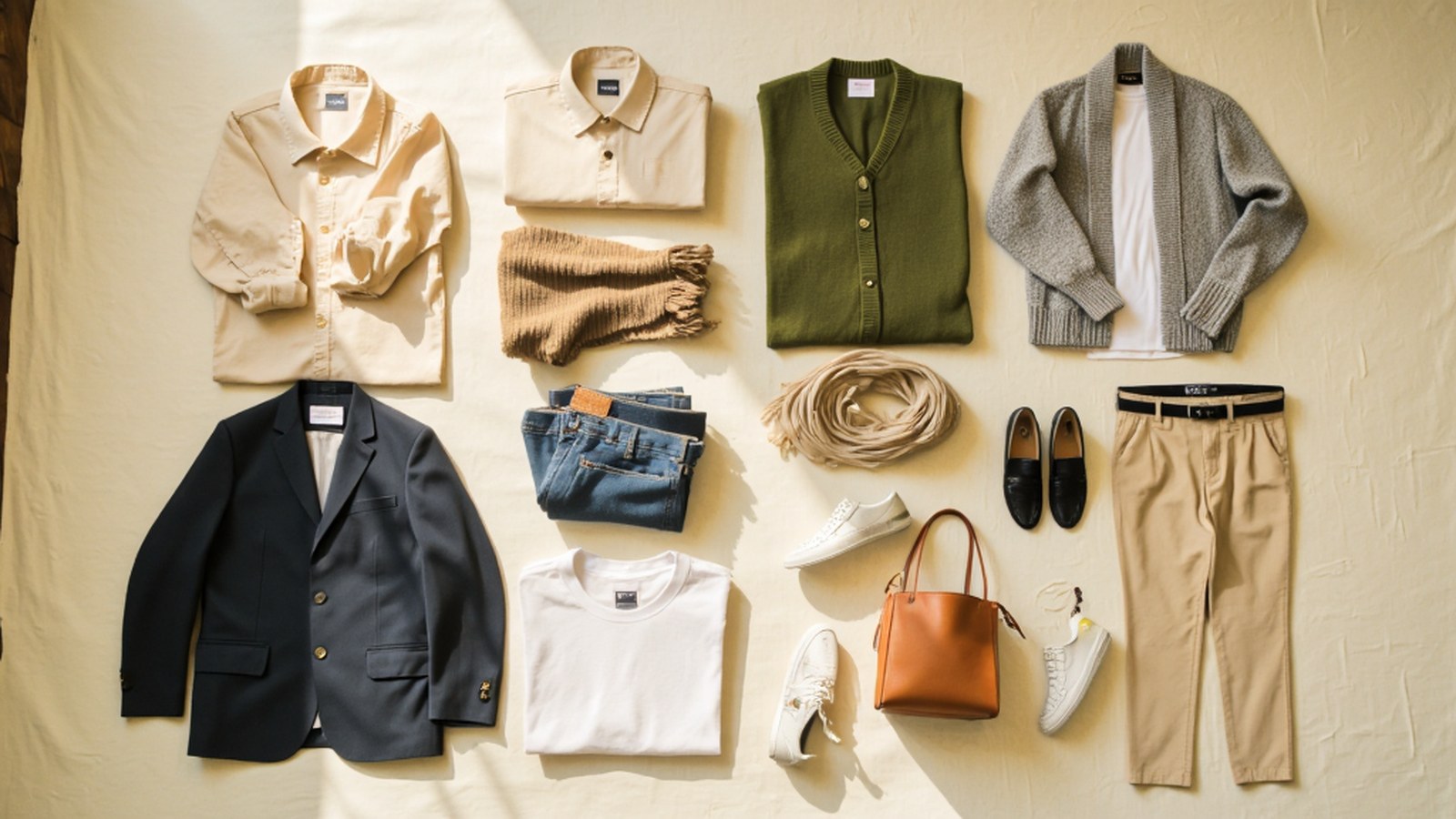
| Standard business casual | Knit or shirt + tailored trouser | Fine knit, overshirt, chinos, loafers, clean sneaker |
| Relaxed | Denim, tees, layers | Dark jeans, heavyweight tee, cardigan, minimal sneaker |
Most people are in the middle band and over-dress for it out of anxiety, which reads as junior. Being slightly under the ceiling is usually better than being above it.
Worth knowing
If you are unsure, dress one notch above the median for the first month, then settle. Nobody is judged for a blazer in week one; people are judged for a graphic tee in a conservative office.
The ten pieces
This capsule covers five working days with weekly laundry, and it moves between the middle and conservative bands by swapping one layer.
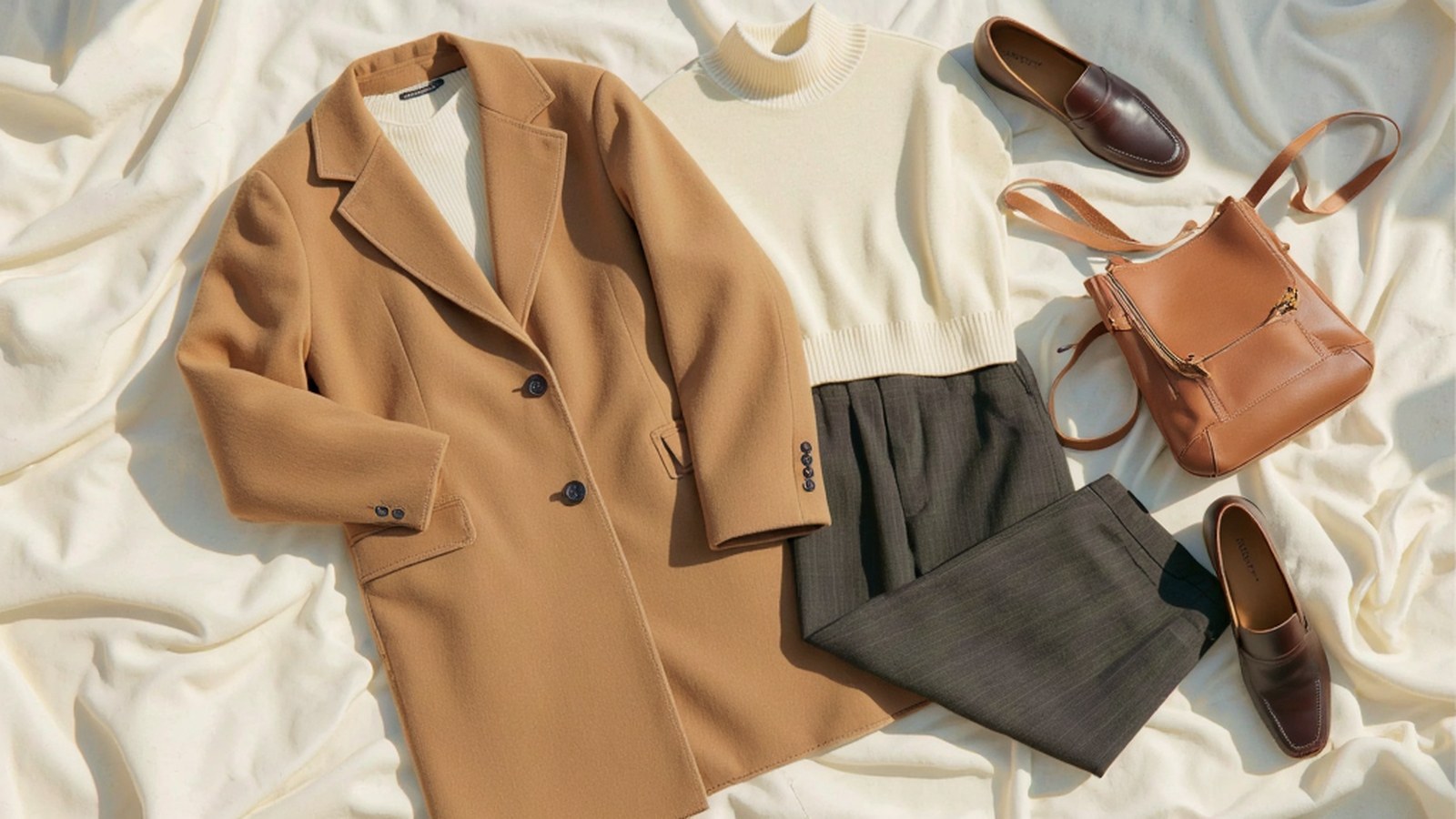
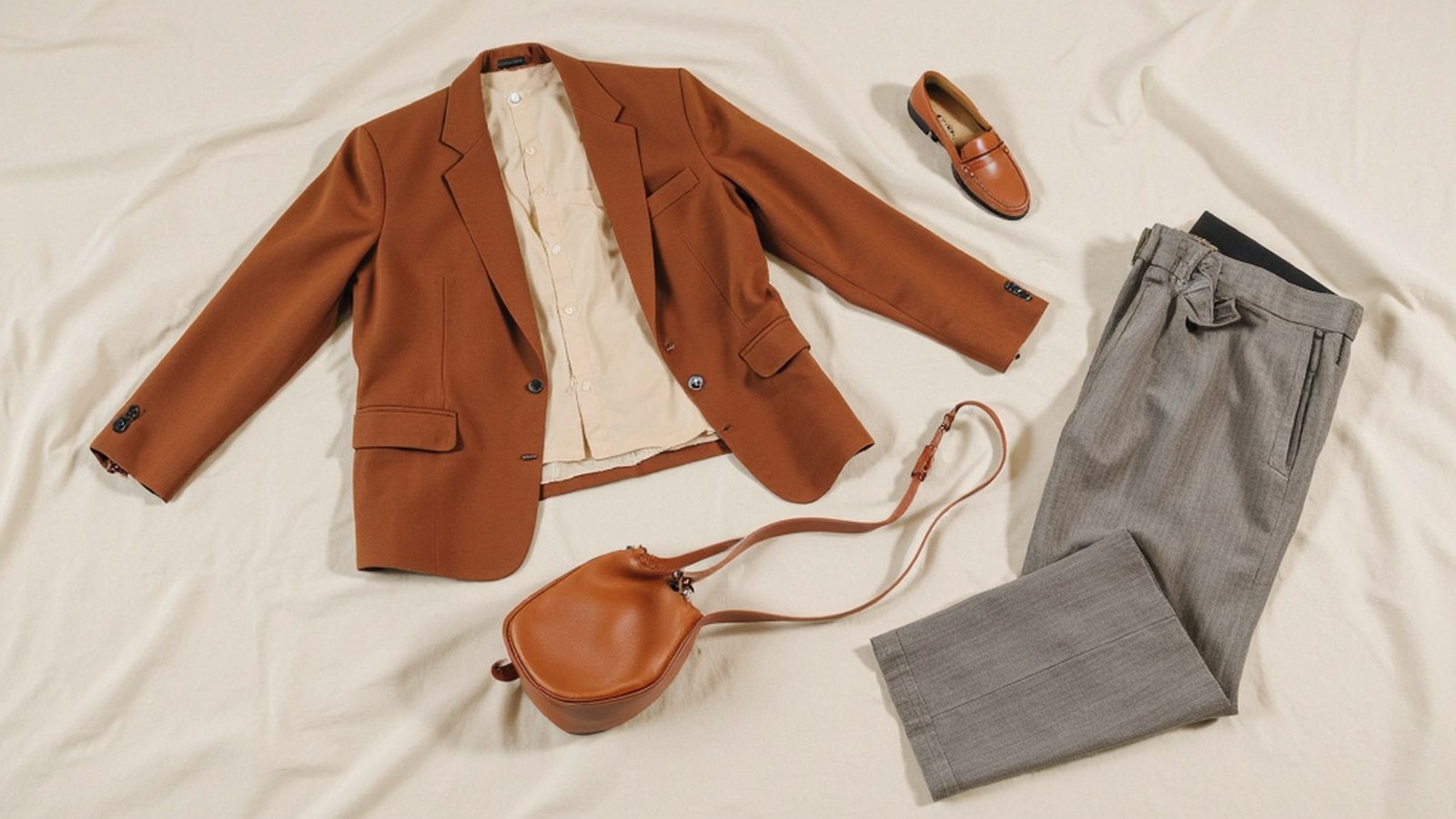
Trousers (2). One wool-blend or heavy cotton in navy, charcoal or camel; one in a lighter colour for variety. Look for a crease that survives an hour of sitting, and pockets that do not gape.
Shirts (2). One crisp white or pale blue cotton shirt, one softer shirt in a colour. The white shirt is the piece that makes everything else look intentional.
Fine knits (2). Merino or a cotton-silk blend, close to the body, in a neutral and one colour. A knit under a blazer is the most comfortable way to do business casual.
Blazer or structured cardigan (1). One is enough. Navy, grey, camel or a dark olive. Check the shoulder seam — it should end at your shoulder, not hang past it.
Trousers alternative (1). A skirt, a wide-leg trouser, or a darker denim if your office allows it. This is the piece that stops the capsule feeling like a uniform.
Shoes (2). One leather shoe — derby, loafer or a low block heel — and one clean sneaker. Both should work with both trousers.
- Navy#2F3E5C
- Charcoal#33312E
- Ivory#F3EBDD
- Camel#B98F5E
- Burgundy#6E2B35
The five-day rotation
The point of a capsule is that you stop deciding. A week that works:
| Day | Outfit |
|---|---|
| Monday | Navy trousers, white shirt, blazer, loafers |
| Tuesday | Charcoal trousers, ivory knit, loafers |
| Wednesday | Navy trousers, coloured shirt, cardigan, sneakers |
| Thursday | Wide-leg trouser, knit, blazer, sneakers |
| Friday | Dark denim, shirt, overshirt, sneakers |
Nothing here is memorable, which is the goal. The variety comes from the layer and the shoe, not from a new outfit every day.
The formula
- One structure piece (blazer or cardigan) over
- One knit or shirt in a colour that flatters you, with
- One tailored bottom that breaks once at the shoe, and
- One leather shoe that matches the trouser
What reads as too casual
These are the things that quietly undercut a business-casual outfit, regardless of price:
- A creased shirt collar. Press the collar, not the whole shirt.
- Athletic sneakers with visible logos — fine in a relaxed office, wrong in a conservative one.
- T-shirts under a blazer with no collar or structure; a knit does the same job better.
- Cropped trousers with a short sock gap in winter. Either no break and no sock, or a proper break.
- A bag that looks like gym kit. One leather or structured tote does more than three casual bags.
What reads as too formal
Over-dressing is a real risk in the middle band:
- A full suit where nobody else wears one.
- A tie in an office without them.
- Very shiny fabrics — a worsted suit trouser with a knit can look like a job interview.
- Heels you cannot walk in. The outfit reads as uncomfortable before it reads as smart.
Building it without buying it all at once
Start with the trousers and the shirt — those two alone fix most days. Add the knit in month two, the blazer in month three, and the second shoe last. If you already own a blazer that fits, you are two pieces from done.
Buy the white shirt last if you are on a budget: it is the easiest to find secondhand in good condition, and the easiest to replace.
The short version
Two trousers, two shirts, two knits, one blazer, one alternative bottom and two shoes is a complete business-casual capsule. Read your office first, buy the trousers and shirt first, and let the layer do the work of making it look considered.
Frequently asked
Are jeans acceptable in business casual?
In many offices, yes — dark, full-length, no distressing, paired with a structured layer and a proper shoe. In conservative offices, no. Copy the most senior person who dresses the way you want to be perceived.
Do I need a blazer?
If you have client meetings, yes. If you are at a desk all day, a structured cardigan or a fine-knit with a collar does the same job with less stiffness.
How many office outfits do I need?
Five, if you do laundry weekly and rotate two pairs of trousers. Five outfits from ten pieces is the standard, and nobody notices repetition more than you do.
What shoes work for a long commute?
A leather derby or loafer with a rubber sole, plus a clean sneaker for the walk if your office allows it. Change at your desk.