The 12-Piece Starter Wardrobe (and What to Skip)
If you are starting from nothing — or starting over — these are the twelve pieces that cover most weeks, in the order worth buying them.
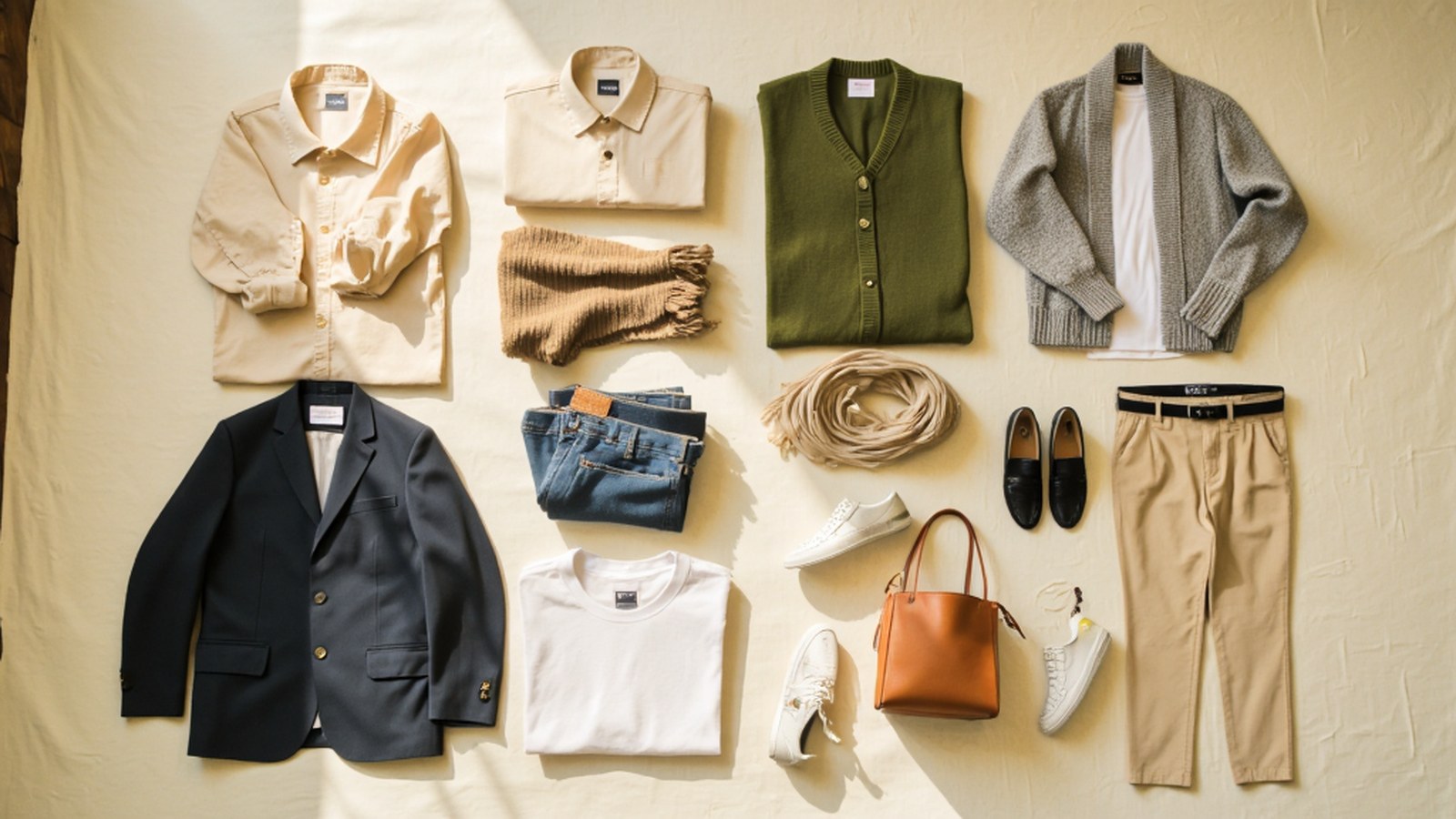
A starter wardrobe is not a shopping list; it is a set of roles. Once you know which roles need filling, the specific pieces become a matter of taste, budget and climate — and much easier to buy without regret.
The twelve below cover a normal week: work, weekends, one thing that needs to look put together. They are listed in the order I would buy them, because the first four do more for your mornings than the last four combined.
The twelve
| # | Piece | Role | What to look for |
|---|---|---|---|
| 1 | White or ecru shirt | Base, dress-up | Substantial cotton, not see-through, relaxed shoulder |
| 2 | Fine-knit crewneck | Base, layer | Merino or cotton, fits close but not tight |
| 3 | Two everyday tees | Base | Heavyweight cotton, holds shape after washing |
| 4 | Straight-leg trousers | Bottom | Mid-rise, breaks once at the shoe, pockets that lie flat |
| 5 | Dark straight jeans | Bottom | Rigid or low-stretch, full-length, no fading |
| 6 | A skirt or second trouser shape | Bottom | Whatever you will actually wear twice a week |
| 7 | Overshirt or light jacket | Second layer | Cotton or wool, room for a knit underneath |
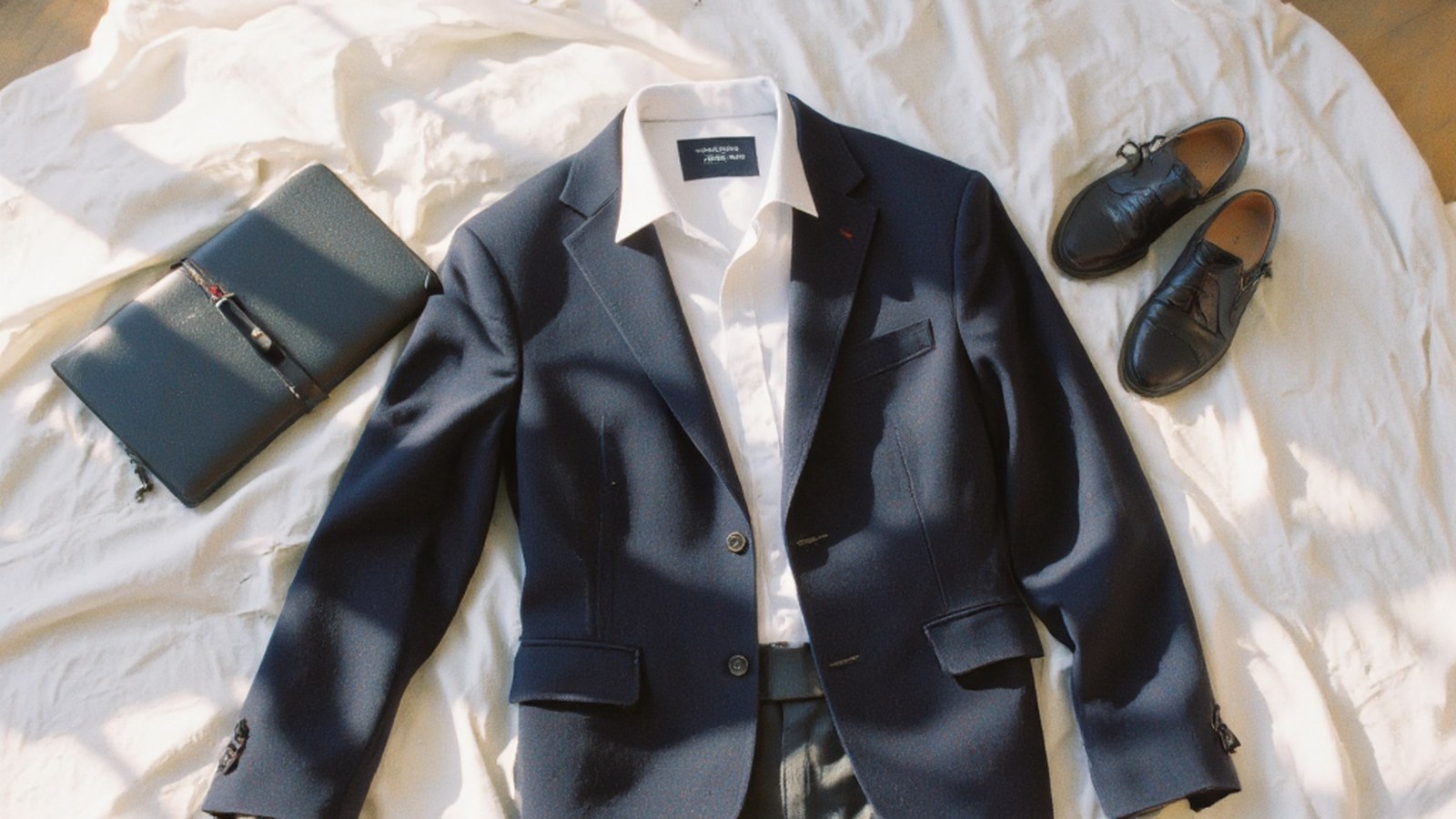
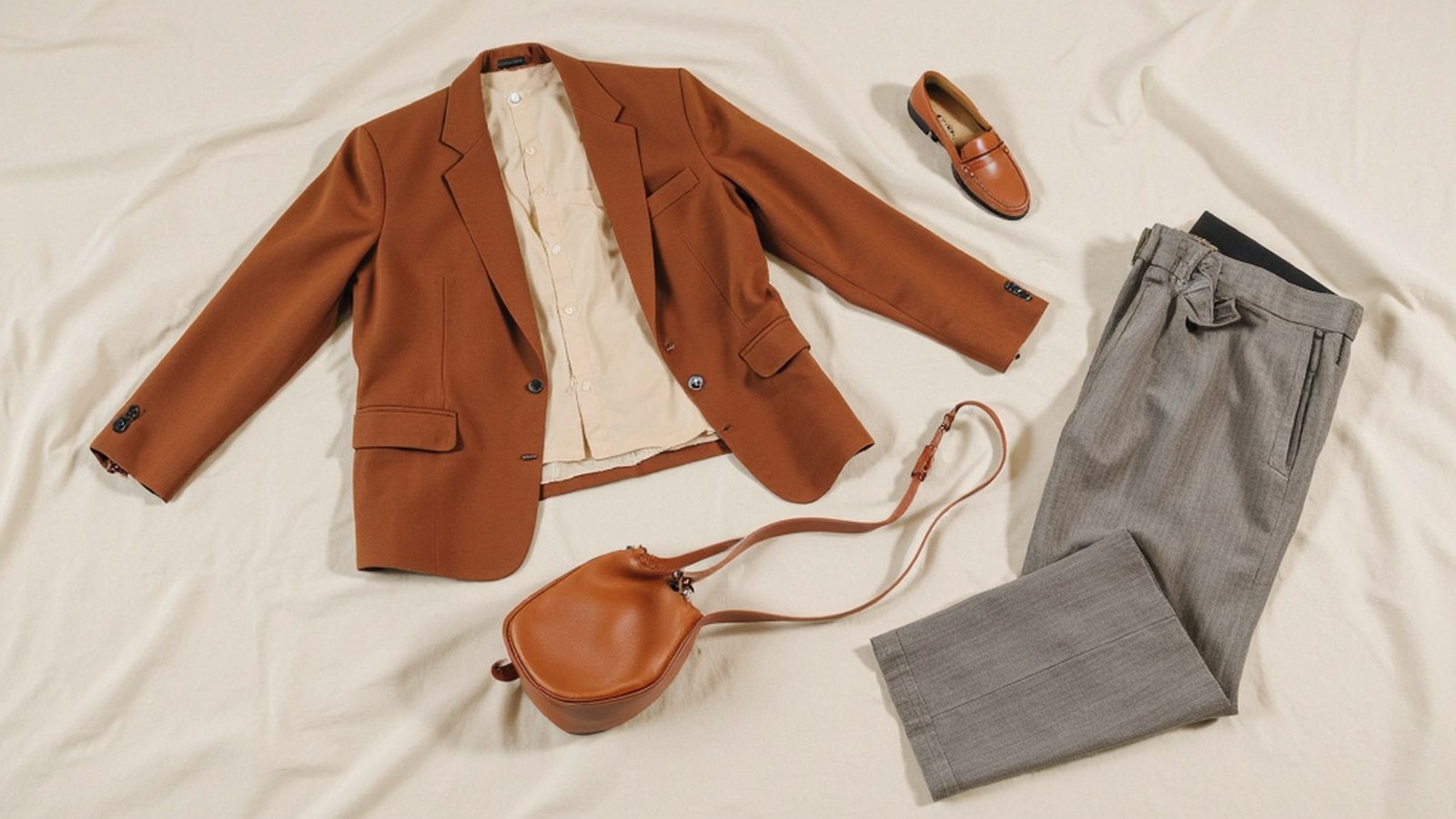
| 8 | Blazer or structured cardigan | Second layer | Shoulder seam on the shoulder, not past it |
| 9 | Everyday leather shoe | Shoes | Walkable, resolable, matches your trousers |
| 10 | Clean sneaker | Shoes | Leather or canvas, minimal branding |
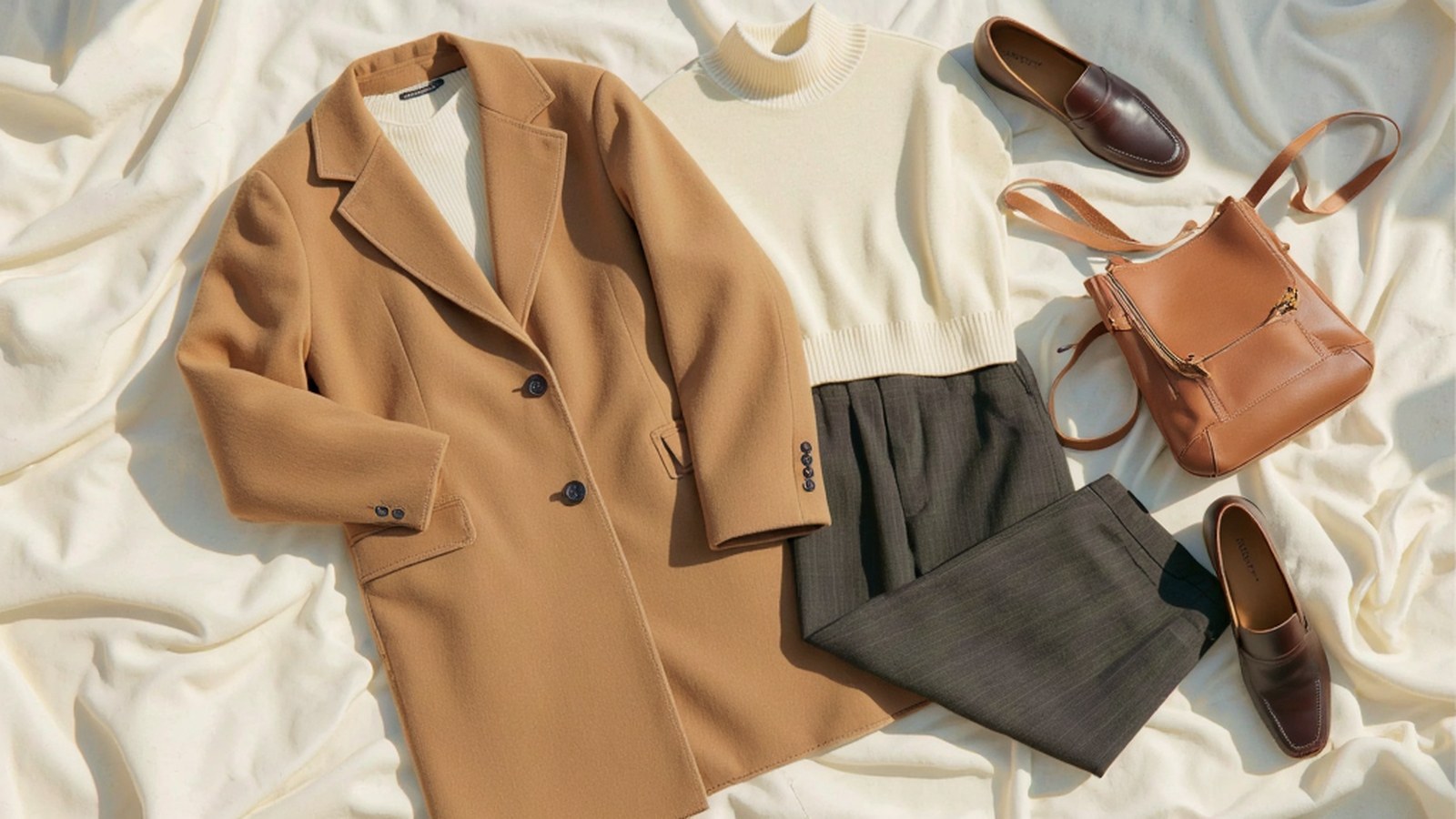
| 11 | Coat that covers everything | Outer | Wool or a technical fabric, mid-calf, room for layers |
| 12 | One accent | Optional | Scarf, bag or knit in a colour you love |
Start here
If you buy only four things: the trousers, the shirt, the knit and the shoes. Those four make more outfits than any other combination on the list, and they are the pieces that decide whether the rest of the wardrobe works.
Tops: the base layer does the heavy lifting
The three tops in this wardrobe should be chosen for how they survive a wash, not how they look on a hanger. Look for a fabric weight you can feel — a cotton tee under 150 gsm will go thin and lose its neckline within a season. Merino is worth the premium for a knit because it resists odour and holds shape.
Fit rule: the shoulder seam should sit at the edge of your shoulder, and there should be room to raise your arms without the hem lifting past your waistband.
Bottoms: buy the shape, then the fabric
Most people buy trousers for the colour and then discover the rise is wrong. Decide the rise and the leg shape first — mid-rise straight is the safest starting point — then find it in a fabric that suits your week.
- For office days: a wool-blend or heavy cotton trouser with a crease that survives sitting.
- For weekends: rigid denim, which holds its shape and lasts years.
- For both: check the pockets. Pockets that gape or lie flat are the difference between trousers you wear and trousers you avoid.
Hem length matters more than people admit. A straight leg should break once, softly, on the shoe. Too short reads as a mistake; too long reads as borrowed.
Second layers: where most wardrobes are thin
One top and one bottom is not an outfit — it is a uniform. The second layer is what makes a plain combination look deliberate, and it is the cheapest way to add range to a small wardrobe.
An overshirt in cotton or wool does more work than a blazer for most people: it can be worn open, buttoned, over a tee or under a coat. A blazer is worth having if your week includes meetings; a structured cardigan covers the same ground more softly.
Shoes: two pairs, chosen together
Two pairs of shoes can cover a week if they are chosen as a pair: one leather shoe that dresses up, one clean sneaker that dresses down. Both should work with the trousers you wear most — check this in the shop, with the trousers on.
A leather derby or loafer is the most useful single shoe for most people. It survives rain better than a suede shoe, it can be resoled, and it reads as intentional with denim as well as wool.
Watch out
Avoid buying shoes for an outfit you have not built yet. "These will look great with the right trousers" is how a shoe ends up worn twice. Buy for the trousers you already own.
The coat
A coat is the most expensive piece and the one you will wear most often from October to March. Buy it last, when you know what you layer underneath, and buy it in a size that fits a knit and a jacket.
Length is the practical decision. Mid-calf covers more of you and looks more formal; hip-length is easier to walk and drive in. If you take public transport in winter, mid-calf plus a scarf is warmer than a heavier short coat.
What to skip
- A second blazer before you have a coat.
- Statement shoes before everyday shoes.
- Anything dry-clean-only for daily wear unless you enjoy that errand.
- A "capsule" bundle designed by someone else's proportions.
- Sale purchases that fill no role — they are the reason wardrobes grow without getting better.
The short version
Build in this order: trousers, shirt, knit, shoes, jeans, second layer, coat, then the accent. Spend on the pieces that touch the ground and the weather. If a purchase does not combine with at least three things you already own, it is not part of the wardrobe yet.
Frequently asked
Is twelve pieces enough for a whole wardrobe?
For a temperate climate and a mix of casual and smart-casual, yes as a starting point. Add a coat and one warm layer if you live somewhere cold, and a second pair of shoes if you walk a lot.
What should I spend the most on?
Outerwear, shoes and the trousers you wear most. They take the most wear per dollar and are the hardest to fake at a low price.
Does this work for men and women?
The categories do — the ratios are the same. The specific pieces differ, but the role each piece plays does not.
Should everything be neutral?
No, but start with neutral for the eight pieces you wear weekly, then add colour where you will actually see it: knits, shirts, a bag, a scarf.