Seven Outfit Formulas That Always Work
Inspiration is unreliable at 7:40 a.m. A formula is not. These seven combinations cover work, weekends and everything in between.
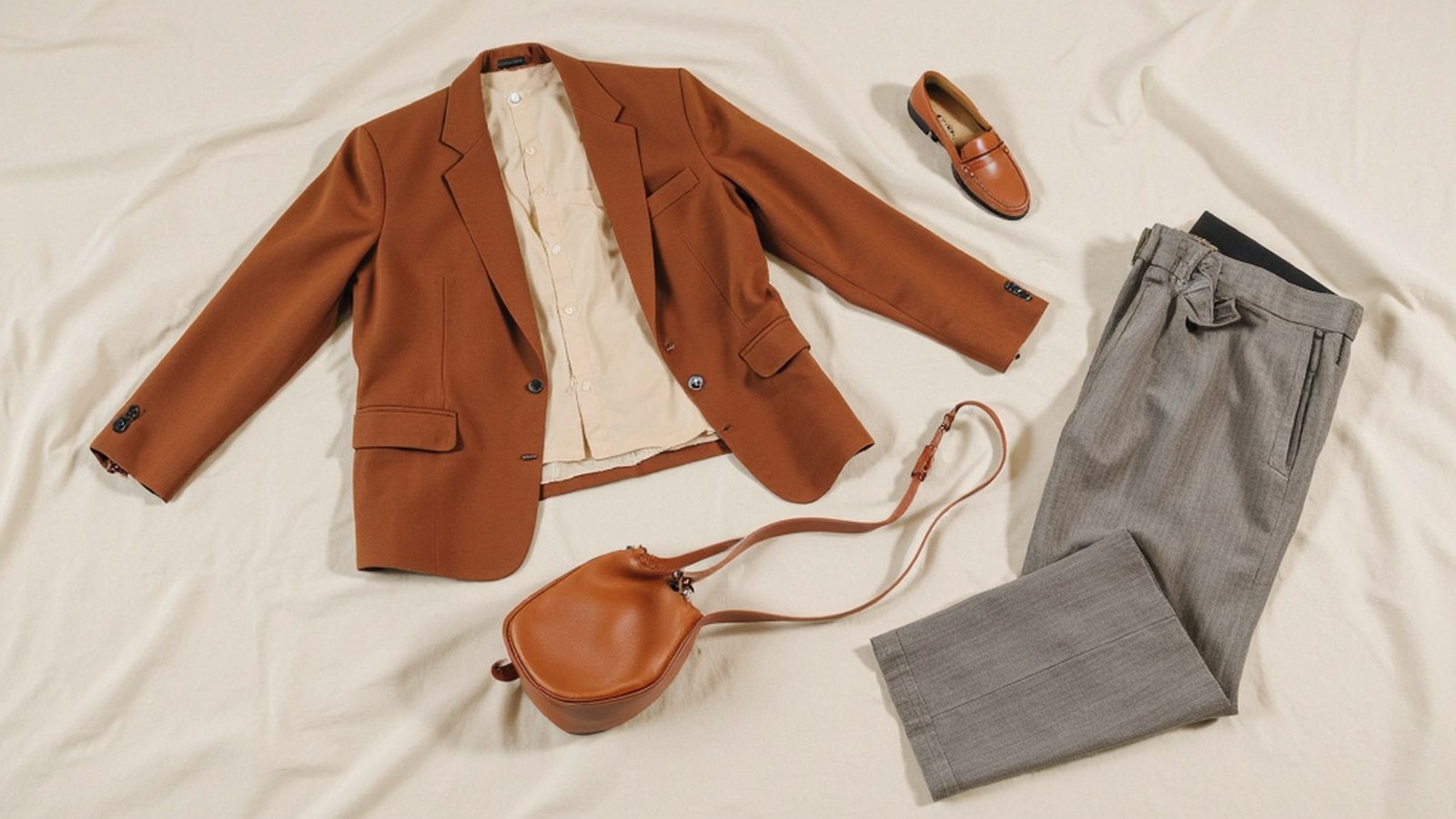
Most people do not need more clothes; they need fewer decisions. A formula is a decision you make once and reuse: a fixed set of roles that you vary by colour, fit and shoe.
The seven below are not trends. They are combinations that have survived long enough to look normal in almost any city, and they work because each one balances volume, value and formality in a predictable way.
| # | Formula | Best for | Fails when |
|---|---|---|---|
| 1 | Column of colour | Smart days, travel | Fabric is too stiff to drape |
| 2 | Knit + tailored trouser + leather shoe | Office, meetings | Knit is too long or too thin |
| 3 | Shirt + denim + blazer | Smart casual, dinners | Shirt is too casual or too big |
| 4 | Dress + layer + shoe | Warm weather, events | Layer is the wrong length |
| 5 | Tee + overshirt + straight leg | Weekends, errands | Everything is the same value |
| 6 | Monochrome + texture | Minimal wardrobes | Two fabrics with the same sheen |
| 7 | Wide leg + fitted top + long layer | Height, drama | Top and layer both oversized |
1. The column of colour
Top, bottom and often shoe in the same or a very close value. The eye reads one long vertical line, which is why it looks taller and more expensive than the same clothes in contrast.
The formula
- Bottom: trouser or skirt in your darkest neutral
- Top: knit or shirt within one or two shades of the bottom
- Shoe: matching or one shade darker
- Break it with: a belt, a texture, or a single piece of jewellery
It fails when the fabric is too stiff to fall in a line — a boxy, heavy knit breaks the column at the waist. Choose pieces with drape.
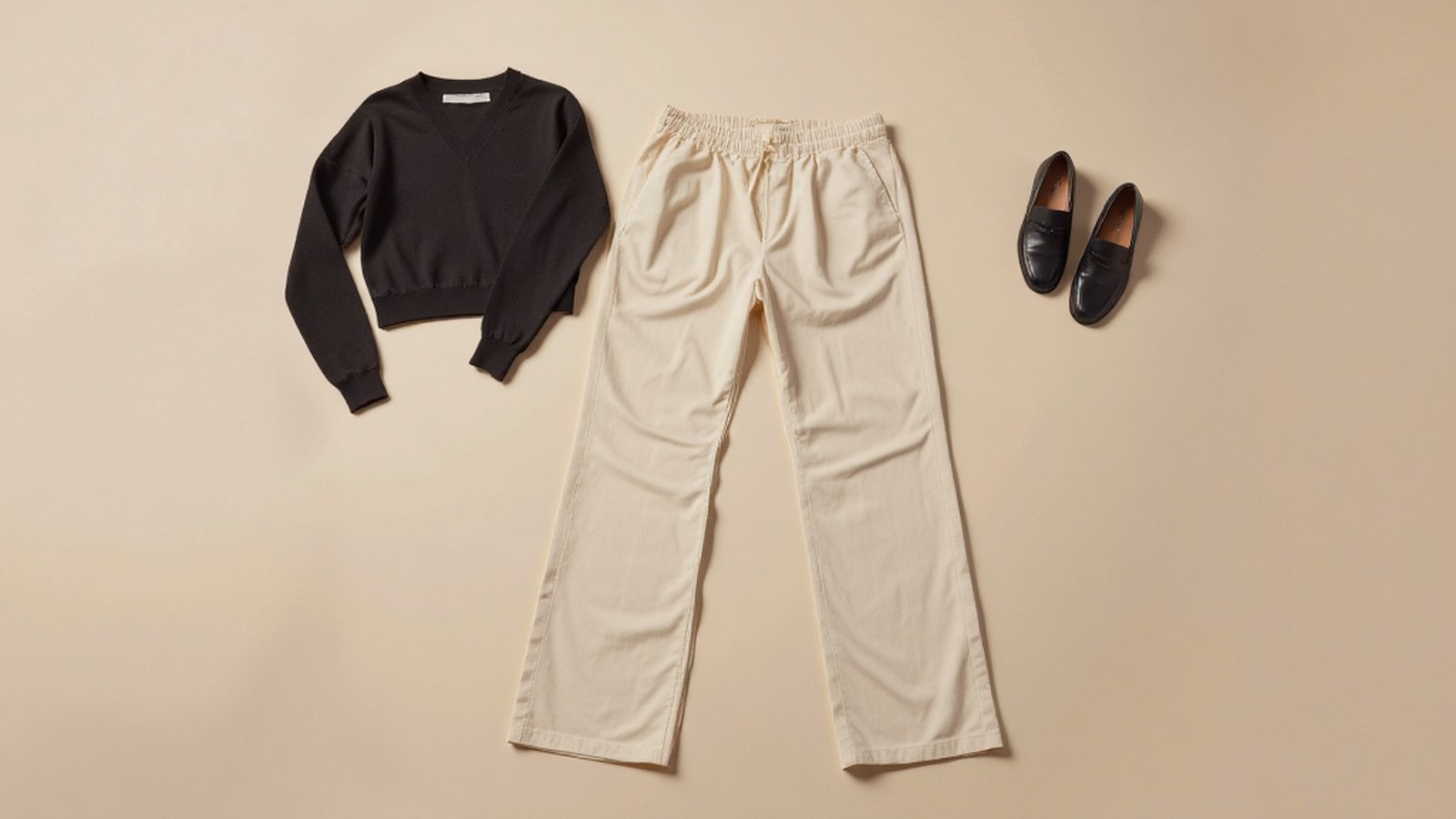
2. Knit plus tailored trouser plus leather shoe
The most reliable office outfit in existence. It is comfortable, it reads as considered, and it needs no accessories to work.
The variables are the knit's neckline and length. A crew neck is the safest; a turtleneck is warmer and more formal; a cardigan is softer and less structured. The knit should end at or just below the waistband — anything longer needs a tuck or a French tuck.
3. Shirt, denim, blazer
A white or pale blue shirt, dark denim, and a blazer that fits at the shoulder. This is the outfit that covers "smart casual" in almost every context, from a client lunch to a dinner.
It fails when one element is too casual: a soft, washed shirt with a structured blazer reads as a mismatch. Keep the shirt crisp and the blazer unstructured, or both structured.
4. Dress plus layer plus shoe
A dress is already a complete outfit; the layer decides its formality. Over a slip dress, a knit cardigan makes it weekend; a blazer makes it work; a leather jacket makes it evening.
The layer's length is the only thing that usually goes wrong. A long cardigan over a short dress works; a long cardigan over a midi dress cuts the body into three. Match the layer's hem to a deliberate point — above the dress hem, or clearly below it.
5. Tee, overshirt, straight leg
The weekend formula. A heavyweight tee, an open overshirt, straight-leg denim, and a clean sneaker. It looks effortless because it is symmetrical: two casual layers on top, one relaxed bottom, one minimal shoe.
It fails when every piece is the same value — a mid-grey tee, a mid-grey overshirt and mid-blue denim read as fog. Put one clear dark or light in the mix.
6. Monochrome plus texture
All one colour, varied by fabric. A wool coat, a cotton shirt, a leather shoe, all in charcoal. This is the formula that makes a small wardrobe look expensive, because it depends on material rather than quantity.
Worth knowing
The trick is contrast of sheen, not contrast of colour: matte wool next to a slight sheen in leather, or a ribbed knit next to a smooth trouser. Two shiny fabrics in the same colour look like a uniform.
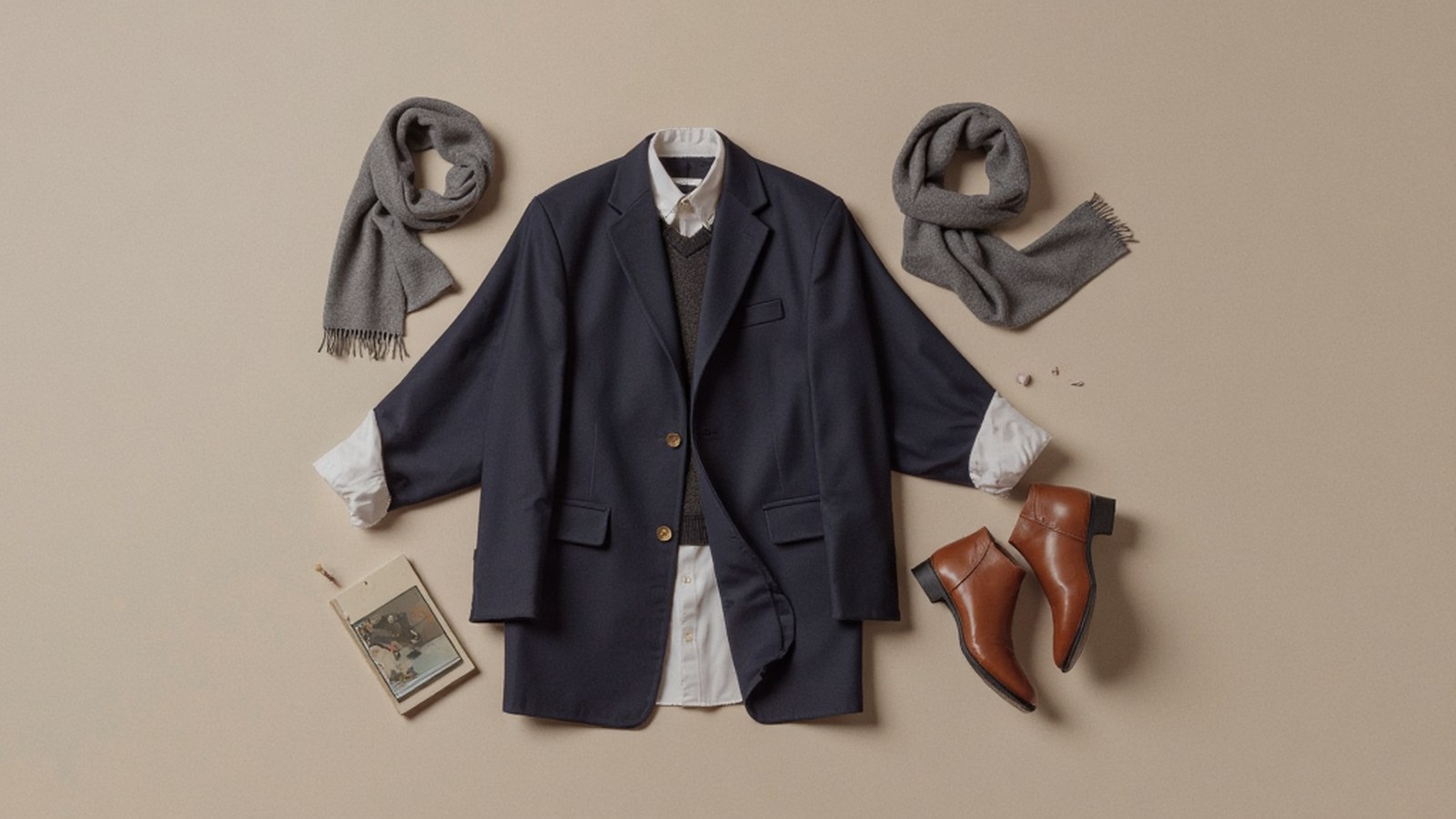
7. Wide leg, fitted top, long layer
Volume at the bottom, a close top, and a long vertical layer — a coat or a long cardigan. It reads as tall and deliberate, and it is the most forgiving formula for anyone who dislikes waist-defined silhouettes.
It fails when the top is also oversized. Two volumes need one long line to hold them together; without it, the outfit becomes a block.
Adapting formulas to weather
The formulas above are summer-neutral. In winter:
- Add a base layer under the knit, not over it.
- Swap the shoe for a boot that matches the trouser value.
- Move the volume from the top layer to the outer layer — a big coat over a fitted outfit reads better than a big coat over a big knit.
- Keep the hem above the puddle. A long coat that touches the ground will be wet by the second block.
Why formulas beat inspiration
Saved outfit photos are curated, lit and worn by someone with a different body, climate and budget. They give you a target you cannot hit. A formula gives you a structure you can fill with what you own.
The test of a formula is not whether it looks exciting in a photograph. It is whether you can put it on in ninety seconds and forget about it all day.
The short version
Learn three formulas properly — column of colour, knit plus tailored trouser, tee plus overshirt — and add the rest as your wardrobe grows. Vary the colour and the shoe, keep the roles fixed, and you will stop having nothing to wear without buying anything.
Frequently asked
What is an outfit formula?
A fixed combination of roles — for example "knit + tailored trouser + leather shoe" — that you vary by colour and fit. It removes the daily decision while still allowing range.
How many formulas do I need?
Three or four cover most weeks. Seven gives you a full rotation without repeating within a week, which is useful if you work in an office.
Do formulas work with a small wardrobe?
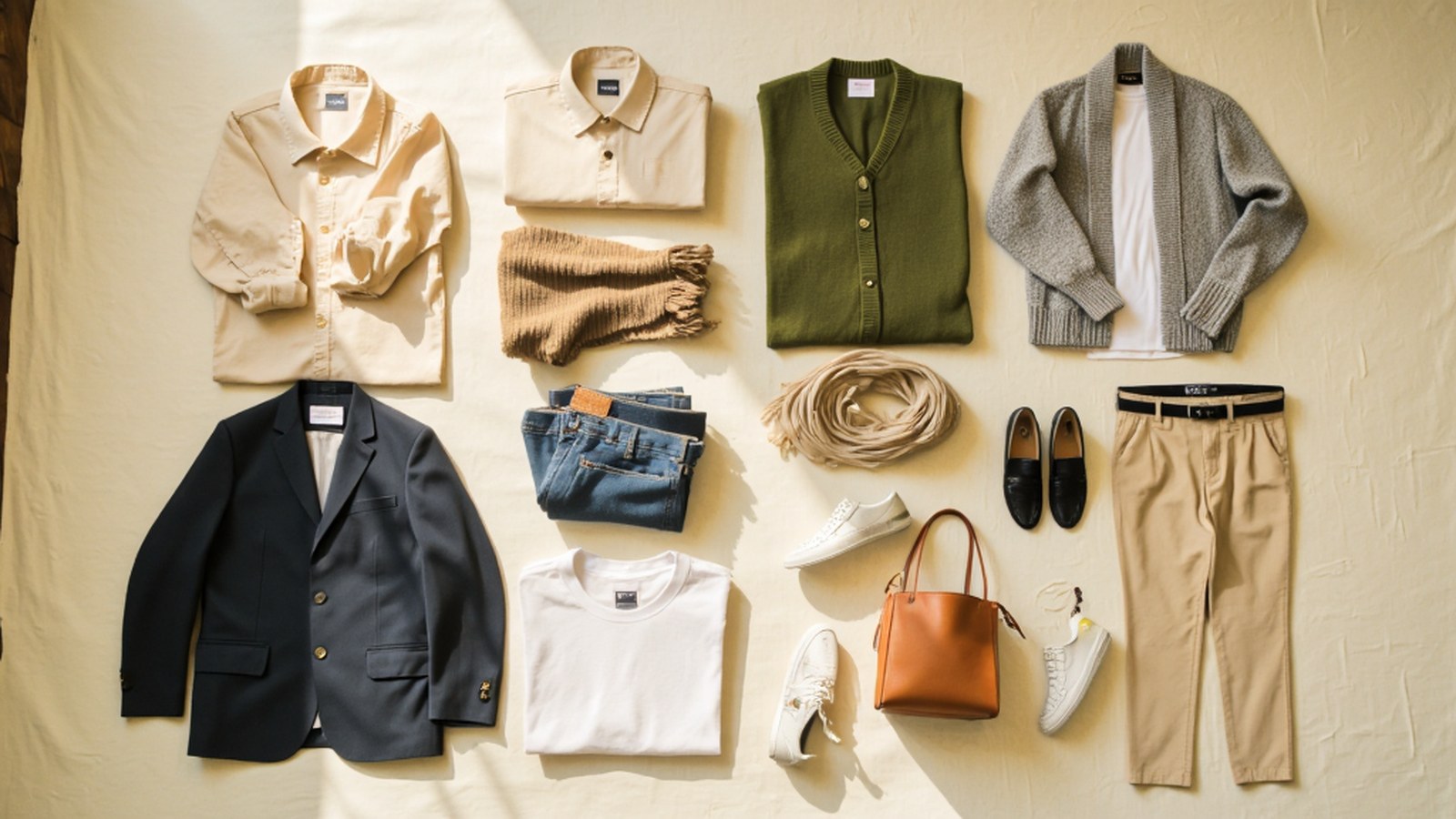
They are how a small wardrobe works. Each formula draws on the same pieces in different roles, which is why ten items can produce a month of outfits.
What if a formula looks boring on me?
Change one variable: the shoe, the colour of the knit, or the length of the layer. Boring usually means "no contrast", not "wrong formula".