How to Choose a Coat That Goes With Everything
A coat is the most-worn thing you own from November to March. Buy it for the weather you have, the layers you wear, and the shoes you actually walk in.
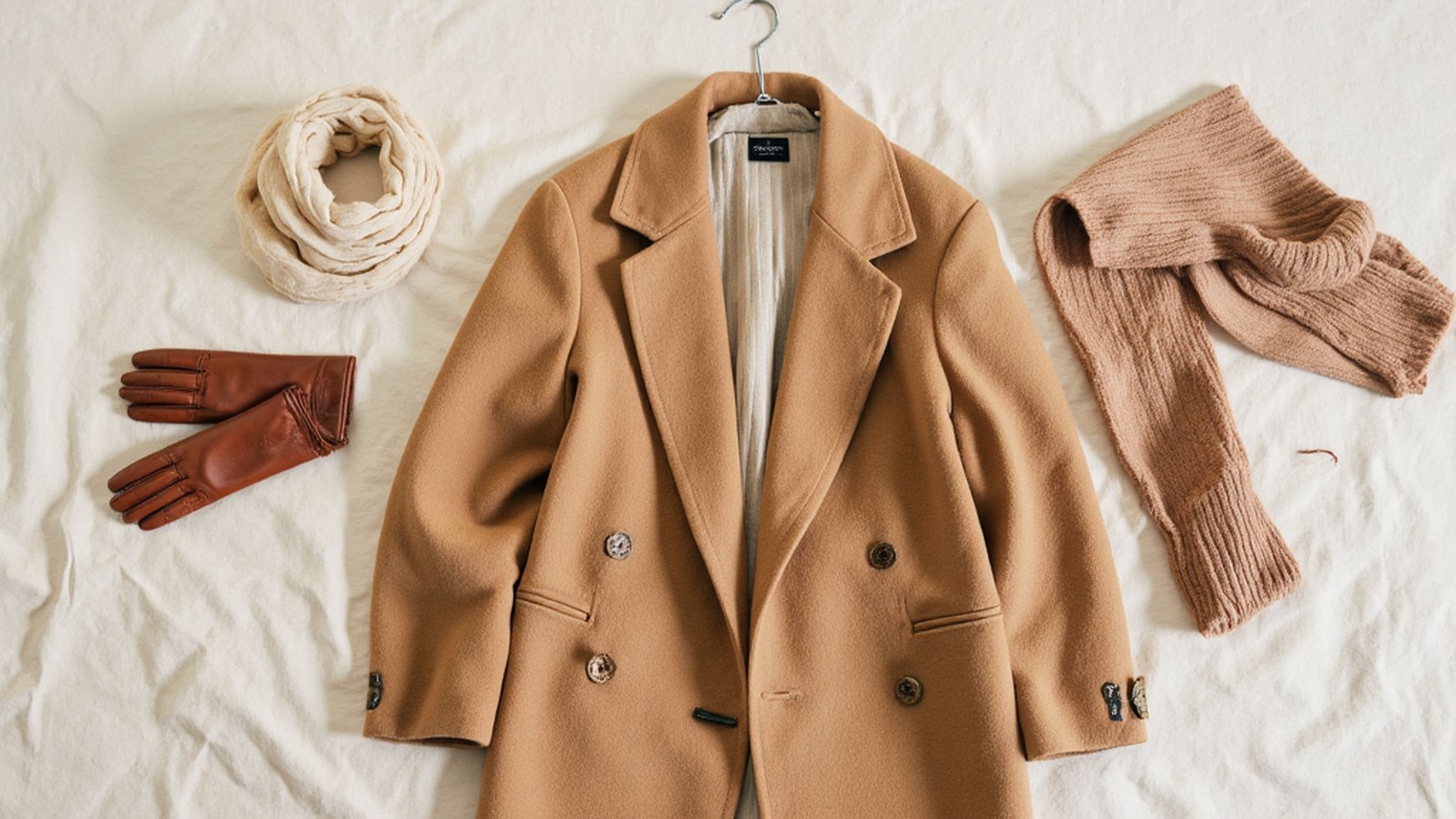
A coat is the piece you wear most and think about least. From November to March it is the first thing anyone sees, it takes more weather than anything else in the wardrobe, and it has to work over everything you own — from a suit to a hoodie.
That makes it the highest-stakes purchase in the wardrobe and the one where a little knowledge saves the most money.
Decide the weather first
The single biggest mistake is buying the coat you like rather than the coat your climate requires.
Dry cold (below 5°C, little rain): wool, wool-cashmere, or a wool blend. It holds shape, looks good over tailoring, and breathes indoors.
Wet cold (0–8°C, rain): a wool coat with a tight weave and a hood, or a technical shell over a wool layer. Wool absorbs water and gets heavy; a shell does not.
Very cold (below −5°C): down or a synthetic insulated coat, ideally hip or longer. Wool alone will not be enough for a commute that involves waiting outdoors.
Mild winter (10°C+): an unlined wool coat, a trench, or a heavy overshirt. A big coat in a mild climate is a wardrobe ornament.
Length is a proportion decision
| Length | Covers | Reads as | Works with |
|---|---|---|---|
| Hip | Torso only | Casual, practical | Jeans, short dresses, driving |
| Mid-thigh | Torso and seat | Everyday, versatile | Everything |
| Mid-calf | Most of the leg | Formal, dramatic | Tailoring, long trousers |
| Full length | Everything | Statement, cold weather | Long lines, boots |
Mid-calf is the most useful length for most people: warm, formal enough for work, and long enough to keep the wind off. Full length looks wonderful and is a nuisance on stairs, buses and wet pavements.
Fabric: what the label actually tells you
100% wool is warm, holds shape and lasts. It is also expensive and can be scratchy. Wool blends with 20–40% polyamide or cashmere are common and fine — the synthetic content often improves durability, and the cashmere improves hand-feel.
Polyester-heavy "wool-look" coats are cheap, light and warm-ish, but they pill, go shiny at the elbows, and do not hold a line. They are a reasonable buy at $80 for a trend coat; they are not a ten-year coat.
Down is measured in fill power: 600 is decent, 700+ is good, 800 is excellent. Check the fill weight too — a high fill power with a thin fill weight is a light jacket.
Technical shells are measured in waterproofing (mm) and breathability (g/m²/24h). For a city coat, 10,000 mm is enough.
Worth knowing
Look at the seams before the fabric. A coat with clean, flat seams and a lined body will outlast a more expensive coat with puckered seams. Turn it inside out in the shop — the inside tells you what the outside will look like in three years.
Fit: room to layer, not a size up
A coat should fit over your heaviest everyday layer — usually a knit plus a jacket — without compressing either. Test it that way in the shop, wearing the layers you actually wear in winter.
Check:
- Shoulder seam at the edge of your shoulder, with room to raise your arms.
- Sleeve length to the base of your thumb when your arms are down.
- Chest and back room to cross your arms and to sit in a car.
- Neck opening close enough to keep the wind out; a scarf fills the rest.
- Pockets at a height you can use with gloves on.
A coat that is tight under the arms will be unwearable by January, no matter how good it looks open.
Colour: one coat, three options
If you own one coat, choose a colour that works with the trousers and shoes you wear most:
- Camel or stone: warm, flattering, shows dirt. Works with denim, navy, cream, black.
- Navy: the safest dark. Smarter than black, more forgiving than charcoal.
- Charcoal or black: the most formal, the least forgiving of lint and light-coloured scarves.
- Olive or forest: a good alternative to navy that still reads neutral.
A bright coat is a second coat, not a first one.
- Camel#B98F5E
- Stone#C9B9A3
- Navy#2F3E5C
- Charcoal#33312E
- Olive#6E7554
What to skip
- A coat with no lining in a cold climate. It will not keep the wind out and it will wear at the shoulders.
- A coat that only works open. You will wear it closed for four months.
- A trend silhouette as your only coat — a cropped puffer or an extreme oversized shape dates faster than you think.
- A coat you cannot raise your arms in. Test it in the shop; you will notice it every day.
- Dry-clean-only wool if you commute daily in a wet city. You will not maintain it.
When and how to buy
Coats are heavily discounted in January and again in late spring. If you can wait, buying a good wool coat at 30–40% off in January is the best value in the wardrobe.
Buy in person if you can. The shoulder, the sleeve and the weight are things a product page cannot tell you, and a coat is too expensive to guess.
The short version
Buy for your weather, your layers and your shoes — in that order. Mid-calf wool in camel, navy or charcoal for most cities; a technical shell or down for real cold and wet. Spend on the fabric and the seams, not the label, and check the shoulder with a knit underneath.
Frequently asked
Wool or down?
Wool for cities and dry cold, down or a technical shell for wet, windy or very cold weather. Wool looks better over tailoring; down is warmer for its weight.
How long should a winter coat be?
Long enough to cover the top of your legs when you sit, short enough to walk and climb stairs. Mid-calf is the most useful length for most people.
Should a coat be oversized?
Room for a knit and a jacket, not a size up for the look. A coat that is genuinely oversized loses its line and lets cold air in at the neck.
How much should I spend?
A wool coat is one of the few places where price correlates with life: $200–$400 buys a coat that lasts a decade if the fabric and seams are good.