The Denim Guide: Fits, Washes and What to Actually Buy
Denim is the most returned category in clothing for one reason: people buy the wash before the fit. Here is the order that saves you a return.
Denim is the most returned category in clothing, and the reason is almost never the size. It is that people choose the wash and the brand first, then discover the cut does not suit the body they have.
The order that works is the opposite: fit first, fabric second, wash third, brand last.
Fit: the four shapes
Most jeans are a variation on four cuts. Knowing which one suits your week matters more than the label.
| Cut | Leg | Best for | Watch out for |
|---|---|---|---|
| Skinny | Tapered to the ankle | Boots, tucking | Uncomfortable if the fabric has little stretch |
| Straight | Even from knee to hem | Almost everyone | Hem length — it must break once |
| Relaxed | Roomier through the leg | Weekends, layering | Can read as oversized if the rise is low |
| Wide | Volume from the hip | Proportion, drama | Needs the right shoe and length |
Straight is the safest starting point. It works with sneakers, loafers and boots, and it does not date the way skinny or extreme wide cuts do.
Fabric: rigid versus stretch
Rigid (100% cotton). Holds its shape, fades honestly, lasts years, and shows the wear of the person wearing it. Uncomfortable for the first week, then molds to you. Buy your true size or half a size up.
Stretch (1–3% elastane). Comfortable immediately, but relaxes through the day and recovers less with each wash. Above 2% stretch, jeans start to feel like leggings and lose their structure. Good for travel and long days; less good if you want them to last.
Weights. Under 10 oz is light and summer-appropriate; 12–14 oz is standard; above 14 oz is heavy, stiff and long-lasting. Heavier denim is harder to break in but holds a line better.
Worth knowing
A useful check in the shop: hold the waistband and pull gently. If it stretches a lot and stays stretched, it will bag out by lunchtime. Rigid denim should barely give.
Rise: the decision people skip
Rise is where the waistband sits, and it changes the entire proportion of the outfit.
- High rise (at or above the navel): lengthens the leg, holds the waist, works with tucked tops.
- Mid rise (just below the navel): the most comfortable, the easiest to wear, the least dramatic.
- Low rise: shorter-looking legs, needs a very specific top; hard to wear well.
For most people, mid or high rise is the practical choice. If you wear tops tucked in, high rise; if you wear tops out, mid rise.
Wash: buy dark first
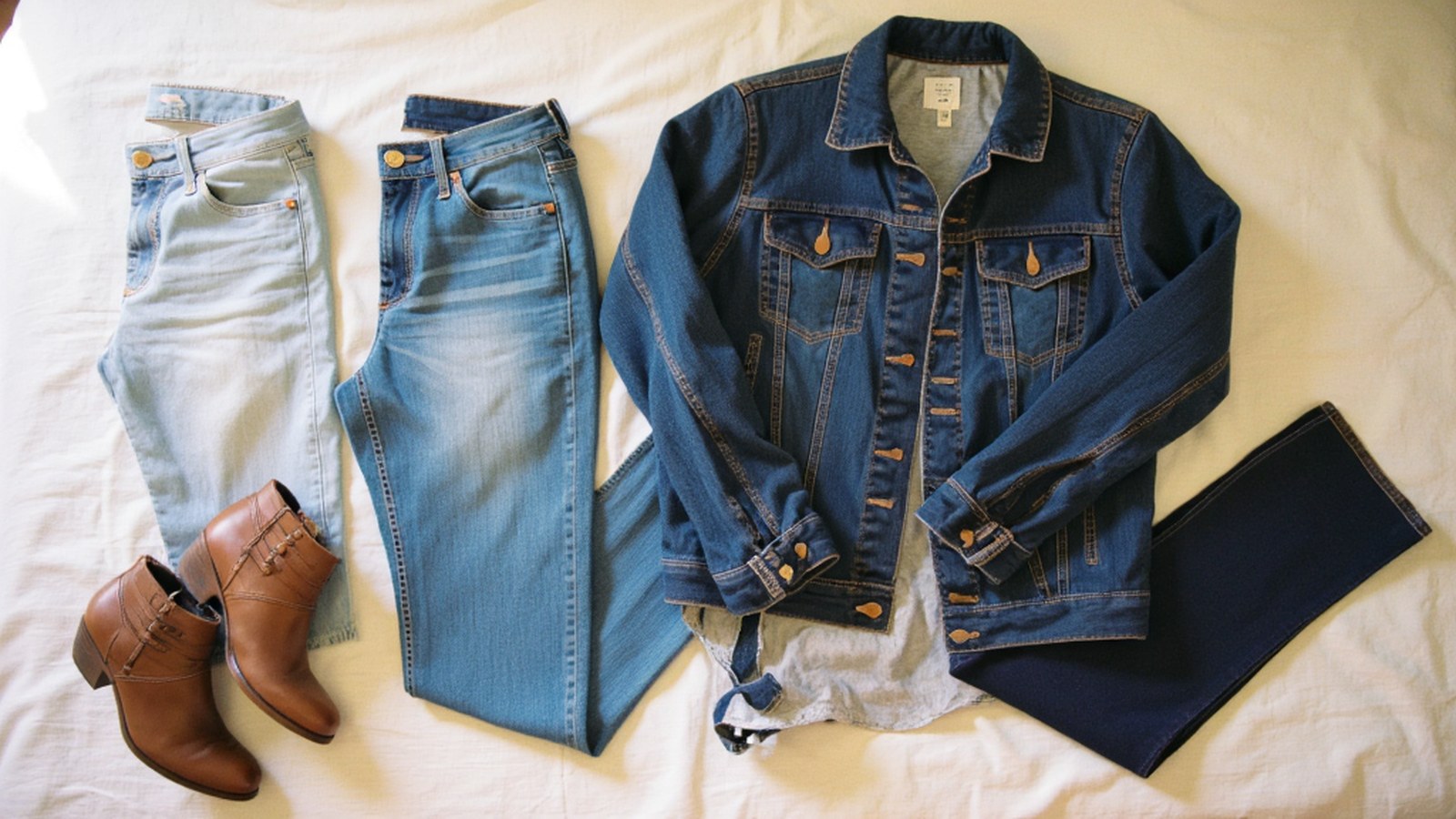
A dark, uniform indigo is the most versatile pair you can own: it reads as smart enough for a restaurant, and it goes with everything. Buy it first.
Then:
- Mid-blue, slight fading: the weekend pair.
- Black denim: useful in place of a dark trouser, slightly more casual than wool.
- Heavily distressed or very light: a trend purchase. Buy last, if at all.
Avoid pre-faded whiskers and honeycombs on your first pair. Real fading takes months and looks better; fake fading looks like a costume the moment the trend moves.
How they should fit
Check these five points, in order, in a fitting room with the shoes you will wear:
- Waistband. You should be able to slide one finger in. If you need a belt to keep them up, they are too big.
- Seat. Fabric should lie flat, not cup under or pull across.
- Thigh. Room to sit and cross your legs without the fabric going tight.
- Knee. For straight and relaxed cuts, the fabric should fall straight from the knee, not cling.
- Hem. With your shoes on, one soft break at the top of the shoe. Not a puddle, not a flood.
If the waist fits but the seat does not, or the reverse, the cut is wrong — try a different shape rather than a different size.
What to pay
- $40–$70: fine for a second pair or a trend shape. Expect 1–2% stretch and a shorter life.
- $80–$140: the value range for rigid or low-stretch denim with decent construction. This is where most people should buy.
- $150+: heavier fabric, selvedge, better hardware, longer life. Worth it if you wear jeans most days and want one pair for five years.
Spend on the pair you wear most, not on the pair you find most interesting.
Care, briefly
- Wash inside out, cold, short cycle. Heat is what kills denim.
- Hang to dry. A dryer destroys stretch and shrinks rigid denim.
- Wash less. Spot-clean between washes; denim does not need weekly laundering.
- Repair early. A blown knee or a worn crotch is a $20 repair, and repaired denim looks better than replaced denim.
If you want the full approach to fabric and longevity, our fabric and care guide goes deeper.
Watch out
Do not buy jeans that are tight in the waist "because denim stretches". Rigid denim relaxes about 1–2 cm; stretch denim relaxes more but also sags. A waistband that hurts on day one will not become comfortable.
The short version
Get the cut right, then the fabric, then the wash, then the brand. Start with a mid or high-rise straight leg in rigid or low-stretch dark indigo, hemmed to your shoes. Two good pairs will outlast five cheap ones.
Frequently asked
Should jeans be tight when you buy them?
No. Rigid denim relaxes about half a size at the waist and seat; stretch denim relaxes more and recovers less. Buy so you can sit down comfortably on day one, not so you can barely button them.
How many pairs of jeans do I need?
Two: one dark, rigid pair for wearing out and one lighter or more relaxed pair for weekends. A third is a preference, not a need.
Is expensive denim worth it?
Sometimes. The premium buys heavier fabric, better construction and longer life — not a better fit. A $60 pair that fits beats a $200 pair that does not.
How should I wash jeans?
Inside out, cold, with a short cycle, and hang to dry. Wash them less often than you think; spot-clean between washes.