Dressing for Proportion, Not "Body Type
Apple, pear, hourglass" is a taxonomy built for shopping, not for dressing. Proportion — where lines land on your body — is the thing you can actually work with.
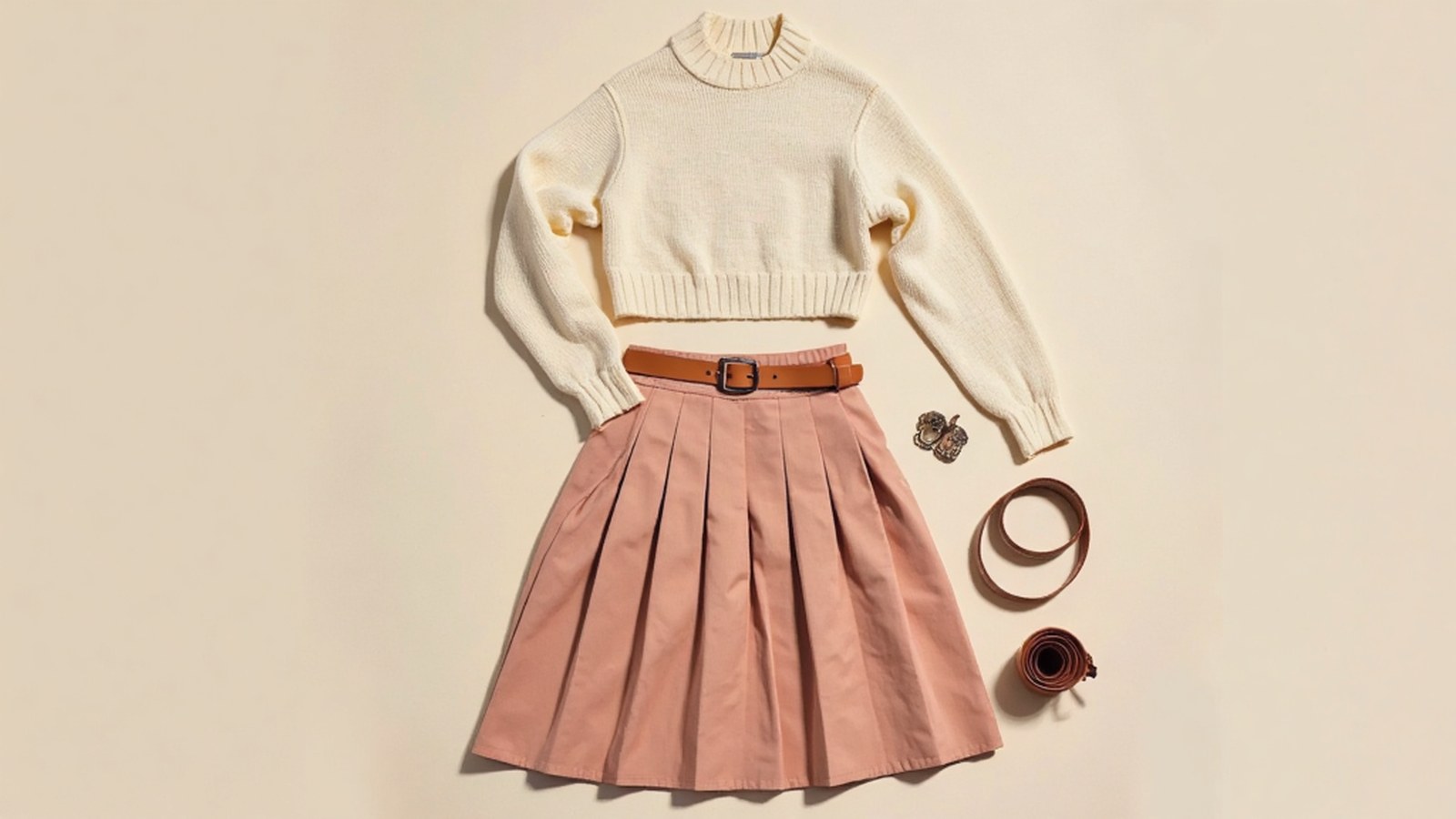
The body-type system — apple, pear, hourglass, rectangle, inverted triangle — was invented by department stores to sell more clothes. Its rules ("pear shapes should avoid..." ) treat a body as a problem with a workaround, which is both unkind and unhelpful.
Proportion is a better tool because it is descriptive rather than judgemental, and because it is local: it is about where a particular hem, waistline or volume sits on you, in a particular outfit. Change the outfit and the proportion changes. That makes it something you can use, not a diagnosis you are stuck with.
What proportion actually means
Three visual properties decide how an outfit reads:
- Where the eye stops. Horizontal lines — hems, waistbands, colour changes — create stops. A hem at mid-calf stops the eye there; a full-length trouser in the same colour as the shoe lets the line continue.
- Where the volume sits. A wide trouser and a fitted top put volume at the bottom; a big knit and slim trousers put it at the top. Neither is wrong — but the distribution should look intentional rather than accidental.
- How many vertical lines you create. A long open layer, a column of one colour, or a high neckline all add vertical line, which reads as length. Breaking the body into three horizontal bands reads as width.
That is the whole system. Everything below is applying it.
The three levers
Lever one: waist placement
The waistline is the strongest line in an outfit. Placing it at your natural waist makes legs look longer; placing it lower lengthens the torso and shortens the leg.
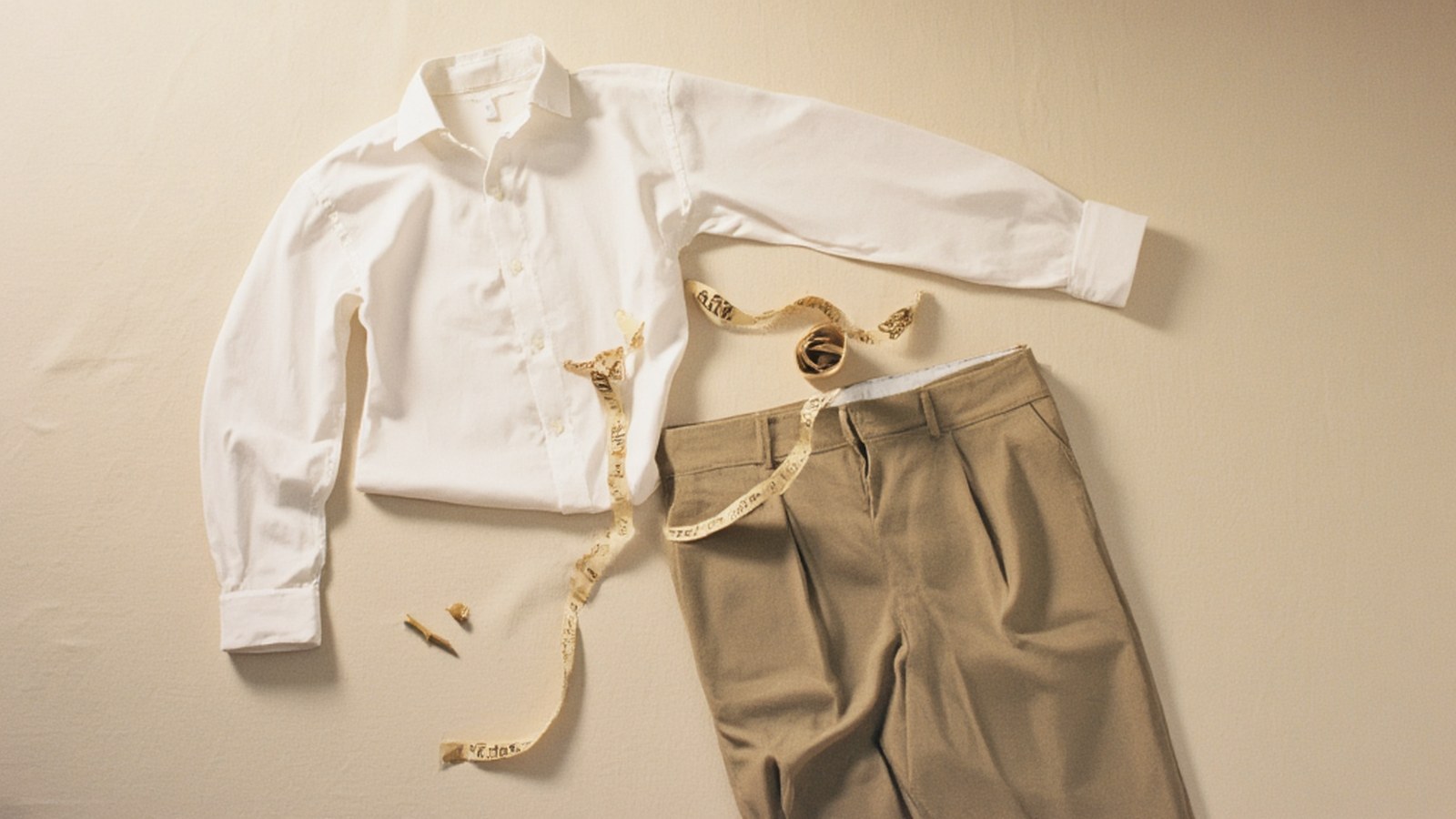
- High-waisted (at or just above the navel) with a tucked top: longer legs, more formal.
- Mid-rise with a top that ends at the hip bone: neutral, the easiest to wear.
- Low or dropped waist with a long top: relaxed, shorter-looking legs — fine if that is the intent.
The mistake is not any of these; it is an ambiguous waistline. A top that ends mid-hip over mid-rise trousers creates a line in the least flattering place. Either tuck it, or choose a top that ends clearly above or below.
Lever two: hem length
A hem is a full stop. The rule that actually holds: do not end a hem at the widest point.
- Trousers: full-length (just above the floor) or cropped above the ankle bone. Mid-calf is the difficult length.
- Skirts: above the knee, at the knee, or midi — but a midi should end at the narrowest part of the calf, not the widest.
- Tops: ending at the hip bone or tucked. Ending at the widest part of the hip is what makes a top look like it does not fit.
Lever three: volume distribution
You can wear volume on top or on the bottom. You cannot usually wear it in both places without it reading as a shapeless block.
| Top | Bottom | Reads as |
|---|---|---|
| Fitted | Wide | Balanced, leg-focused |
| Oversized | Slim | Relaxed, top-heavy on purpose |
| Oversized | Wide | Deliberate only with a clear waist or a long line |
| Fitted | Fitted | Sharp, more formal, less forgiving of fit errors |
If you want to wear both loose, add one long vertical element — an open coat, a long cardigan — and a clear waist line, even if it is just a belt under the layer.
Colour and line
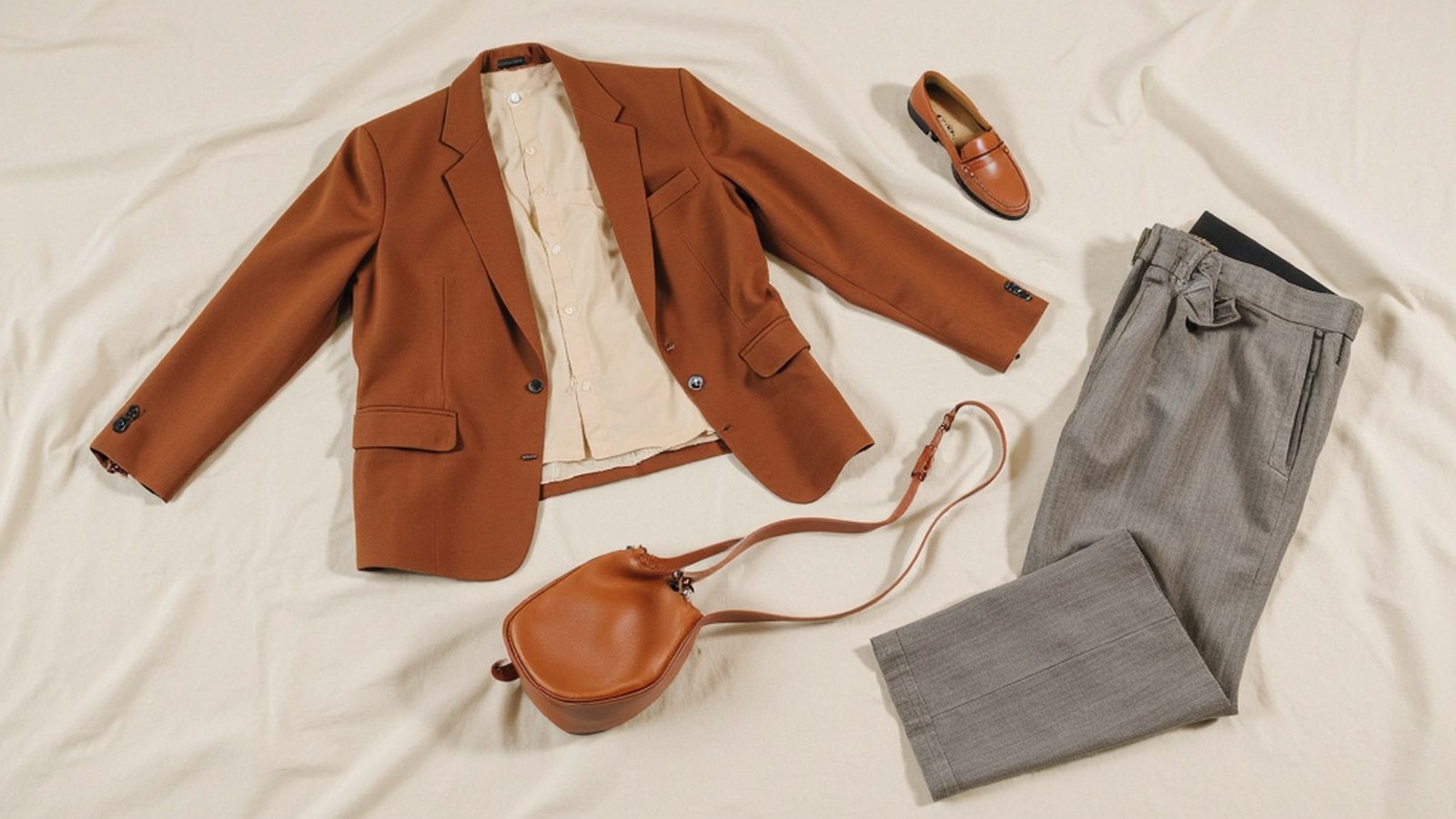
A single column of colour — top and bottom in the same value — creates the longest unbroken vertical line you can wear. This is why a dark trouser with a dark shoe looks longer than the same trouser with a pale shoe.
You do not need to dress in one colour. Two rules cover most of it:
- Keep the bottom half close in value (trouser and shoe), especially if you want length.
- Put contrast where you want attention — a bright top draws the eye up; a bright shoe draws it down.
- Ink#1C1917
- Slate#4A4A48
- Ecru#F1E8DA
- Blush#C99A92
- Bordeaux#6E2B35
Why the "rules" fail
Most dressing rules are borrowed from a specific body, a specific decade and a specific camera angle. The ones worth keeping are the ones that describe a visual effect rather than a prohibition:
- "Horizontal stripes make you wide." A fine stripe reads as texture. A wide stripe across the widest part of the body does add width — but so does any horizontal line there. It is about placement, not direction.
- "Short people can't wear long coats." A long coat in a colour close to the trousers, with a high button stance, reads as one long line. A short coat in a contrasting colour breaks it. Length is not the problem; the break is.
- "Never wear white after Labour Day." A rule about American social signalling from the 1950s. Ignore it.
- "Petites should avoid prints." Scale matters more than presence. A print scaled to your frame works; a huge print overwhelms the garment.
A practical way to test it
Proportion is easier to see than to reason about:
- Photograph yourself in the outfit, standing naturally, phone at chest height.
- Look at where the horizontal lines fall: hem, waist, where the colour changes.
- Ask one question: is any line landing at the widest part of something? If yes, move it.
- Change one thing — tuck the top, swap the shoe, change the hem — and photograph again.
Two photos and one change will teach you more than any style quiz.
Worth knowing
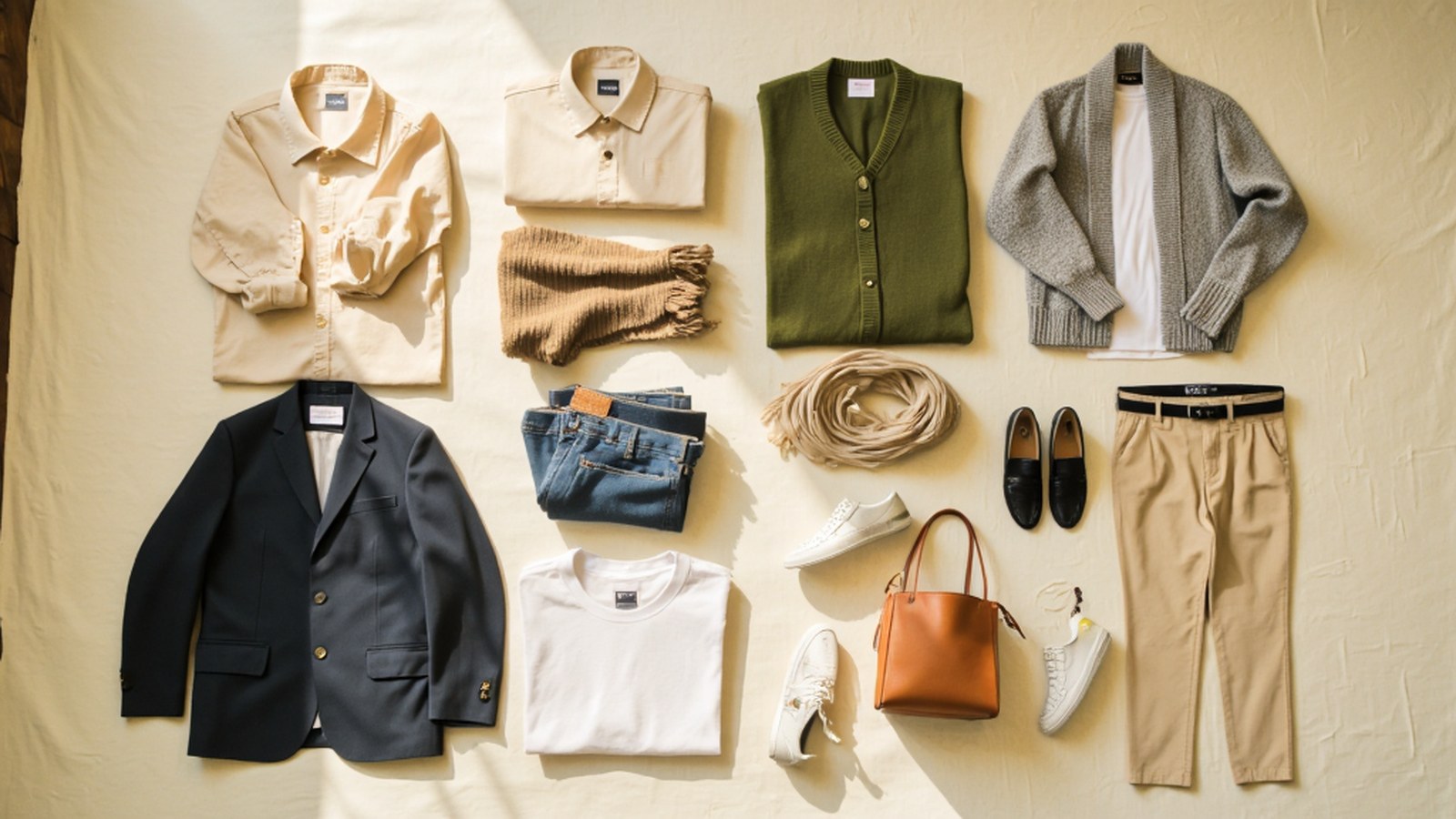
Your proportions change with the weather, the shoe and the layer. That is why a wardrobe built on "rules for your shape" gets brittle, while a wardrobe built on a palette and a few reliable silhouettes keeps working.
The short version
Forget the taxonomy and work with three levers: waist placement, hem length and volume distribution. Avoid ending a line at the widest point, keep the bottom half close in value, and put contrast where you want attention. Comfort is part of the calculation — a proportion that only works when you stand still is not working.
Frequently asked
Do I need to know my body type?
No. Body-type systems sort people into five categories and then sell rules for each. Proportion is more useful: it looks at where hemlines, waistlines and volume sit on your specific body, and it changes with what you wear.
Can I wear horizontal stripes?
Yes. Whether a stripe flatters depends on its width, its placement and what it is next to — not on the direction alone. A fine stripe on a knit reads as texture, not as width.
What if I am short?
Work with one continuous line of colour, keep hems deliberate (cropped or full-length, not in between), and place the waist where your body bends. Height is a variable, not a problem to solve.
Is there a rule about where a hem should end?
Yes, and it is simple: avoid ending a hem at the widest part of a limb or the widest part of your body. Move it above or below that point.