How to Layer Without Looking Bulky
Layering goes wrong in three places — the neck, the shoulder and the waist. Fix those and you can wear five layers without looking like a coat rack.
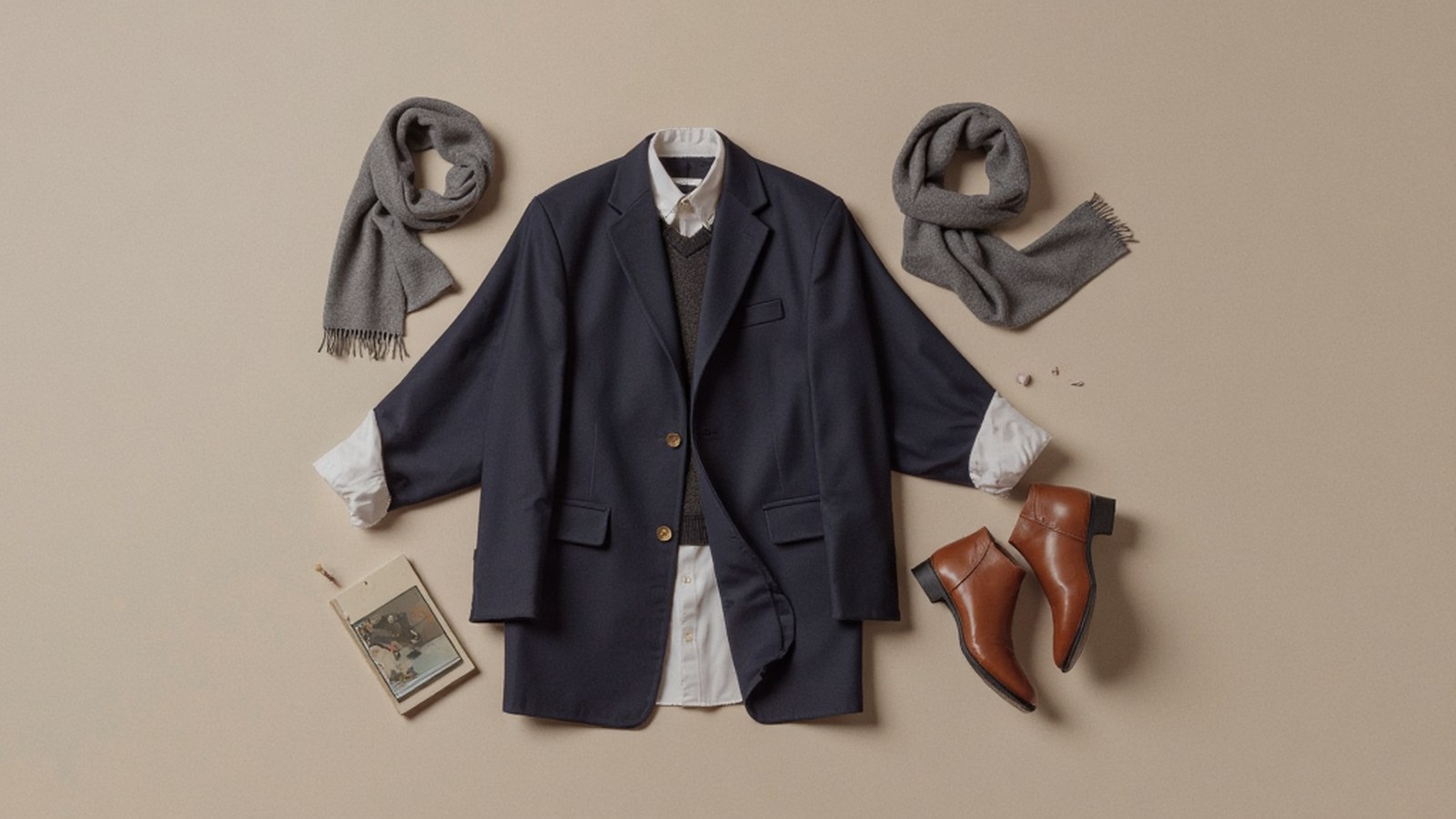
Layering is the most useful skill in a cold-climate wardrobe and the easiest one to get wrong. The instinct is to add warmth by adding thickness, which is exactly what makes people look and feel bulky: the body loses its line, movement gets stiff, and you overheat the moment you go indoors.
The solution is not fewer layers. It is thinner layers, better placed. Bulk is not caused by the number of pieces; it is caused by three specific points of accumulation.
Where bulk actually comes from
The neck. A collared shirt, a turtleneck, a scarf and a coat collar in the same place create a mass under the chin and around the jaw. This is why a bulky outfit makes the face look small.
The shoulder. Raglan sleeves, dropped shoulders and thick knits all add width exactly where the eye reads your frame.
The waist. Two thick hems meeting at the waist — a knit ending at the hip plus a trouser waistband — add a horizontal band of volume at your middle.
Everything else is secondary. If those three are controlled, four layers can look clean.
The rule: thin to thick, short to long
Two rules handle most layering:
- Thinnest against the body, thickest outside. A fine merino base, a mid-weight knit, a wool coat. Reverse it and the whole outfit sits badly.
- Shortest layer innermost, longest outermost. Each layer should be visibly longer than the one beneath it, so the hems stack in a deliberate line instead of competing.
When the second rule is broken — a long shirt under a short sweater — the result is a visible hem at the widest part of the hip, which reads as bulk even when the layers are thin.
Worth knowing
If you only remember one thing: the hem of each layer should end at a different, intentional point. Three hems at three random heights is what makes a layering outfit look accidental.
Fabric weight matters more than piece count
A 400 gsm wool coat plus a 200 gsm knit plus a 150 gsm tee is three layers and one clean silhouette. A thin puffer under a thin blazer is two layers and a shapeless one, because the puffer inflates where the blazer cannot follow.
Practical weights:
| Layer | Good range | Too heavy for layering |
|---|---|---|
| Base | 120–180 gsm cotton, fine merino | Fleece, brushed cotton |
| Mid | 200–300 gsm knit, flannel shirt | Chunky cable knit, quilted vest |
| Outer | Wool, technical shell, leather | Puffer under a tailored coat |
Five layering formulas that stay slim
Shirt under a crew-neck knit. The classic. The collar and cuffs show, the body stays flat. Works because the shirt is thin and the knit sits on top without a gap at the neck.
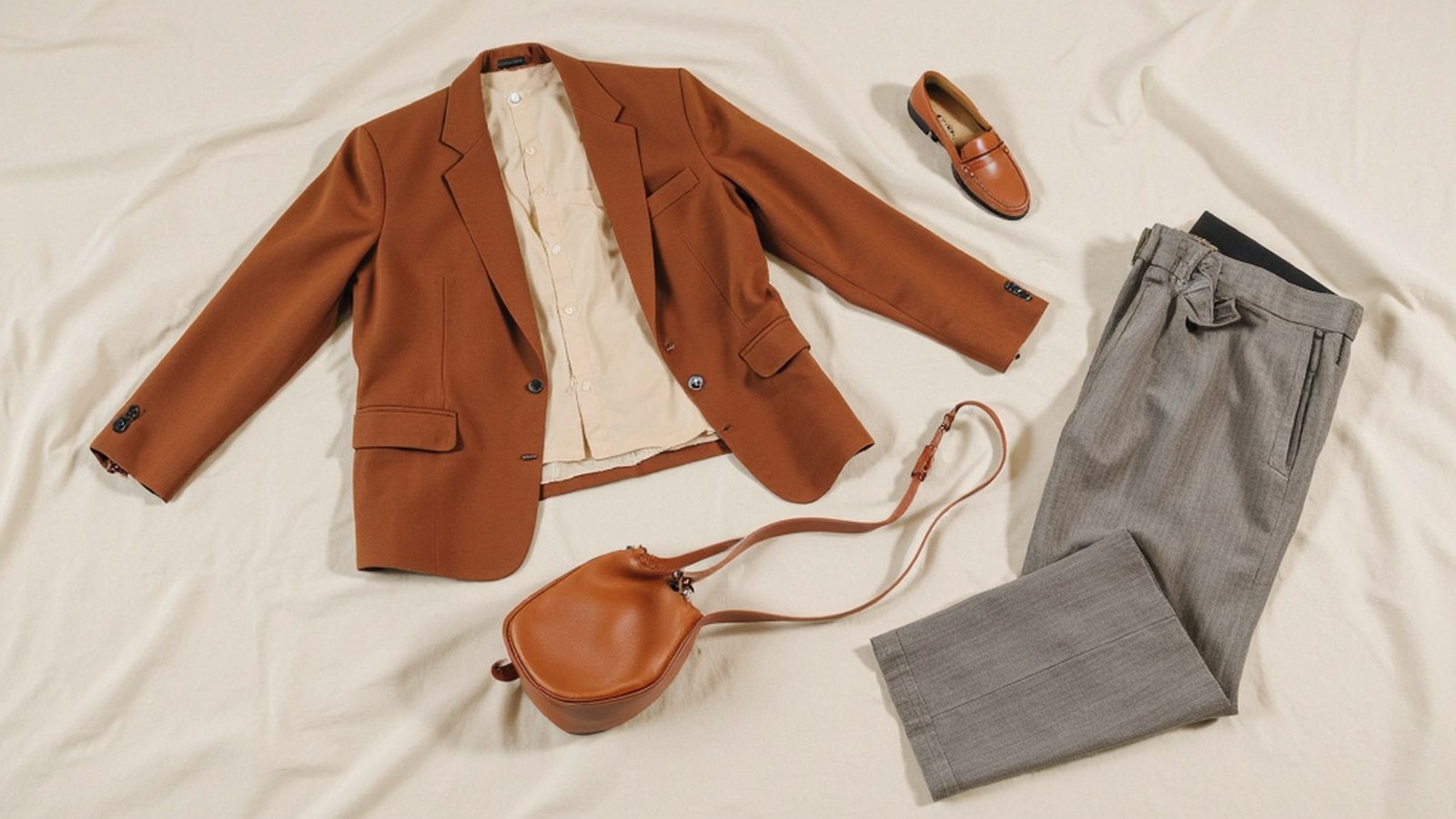
Turtleneck under a blazer. Warmer than a shirt, cleaner at the neck than a scarf, and thin enough to keep the blazer's line.
Fine knit under an overshirt. The overshirt does the work of a jacket without the structure; the knit keeps it warm. Choose an overshirt with a straight hem, not a curved one, so it hangs clean over the knit.
Base layer under a dress or jumpsuit. A thin long-sleeve under a sleeveless dress extends its season by three months. Keep the base close to the body and the same value as the dress.
Coat over a shirt and knit. The outer layer is where you can add volume safely — it is the last thing on, so it does not compress anything underneath.
The things that actually look bulky
- A thick scarf wrapped twice under a coat collar. Use a thinner scarf, or let it hang.
- A dropped-shoulder knit under a structured coat. Two competing shoulder lines.
- A belt over a thick knit. It creates a pinch and a bulge.
- A long shirt hanging below a shorter knit in a contrasting colour, at the widest part of the hip.
- A puffer under anything tailored.
- Three different collar types at the neck at once.
Watch out
If you are layering for real cold — below freezing — warmth beats line, and nobody will judge a technical layer. The rules above are for looking intentional at 5°C, not for surviving a blizzard.
Layering for a commute
The hardest layering problem is not cold, it is change: you leave at 4°C, sit in a 22°C office, and walk home at 6°C in the rain. A single heavy layer cannot do that, which is why the four-layer system exists.
Build it so that one layer can be removed without the outfit collapsing:
- Inside: the base plus knit should already look like an outfit, because that is what you will wear at your desk.
- Outside: the coat and the scarf should be removable at the door without leaving you in something you would not be seen in.
- Shoes: if you walk far, carry the leather pair and wear the boots. A bag that holds a pair of shoes is worth more than a fifth layer.
That single principle — every layer must work when it is the outermost one — is the difference between layering that looks intentional and layering that looks like you are moving house.
A cold-weather outfit, layer by layer
The formula
- Base: fine merino long-sleeve, close to the body, tucked
- Mid: mid-weight crew knit that ends at the waistband
- Outer: wool coat, mid-calf, sized to fit the knit
- Neck: thin scarf, knotted once, not wrapped
- Bottom: wool-blend trouser with a boot that matches its value
Five layers, one silhouette, because each one is thin and each hem ends at a different intentional point.
The short version
Layer thin-to-thick and short-to-long, and control the neck, shoulder and waist. You do not need fewer layers to avoid bulk — you need thinner ones in the right order, with hems that stack deliberately rather than fight.
Frequently asked
How many layers is too many?
Four is usually the practical maximum: base, mid, outer, and a scarf. Beyond that, movement becomes awkward and the silhouette disappears.
Should the innermost layer be tight?
Close-fitting, not tight. A base layer that is too tight makes everything above it sit badly, and it traps heat you will want to lose indoors.
Do I need a thin layer under a sweater?
Yes in winter, if the sweater is wool. A thin cotton or silk base protects the knit, reduces washing, and adds warmth without volume.
How do I layer over a dress?
A fine knit over the bodice, or a shirt underneath. Avoid a bulky cardigan over a fitted dress — the volume clash is what reads as bulky.