How to Style Wide-Leg Trousers Without Looking Shapeless
Wide-leg trousers are a proportion decision, not a trend. Get the rise, the length and the top right and they are the most flattering thing in the wardrobe.
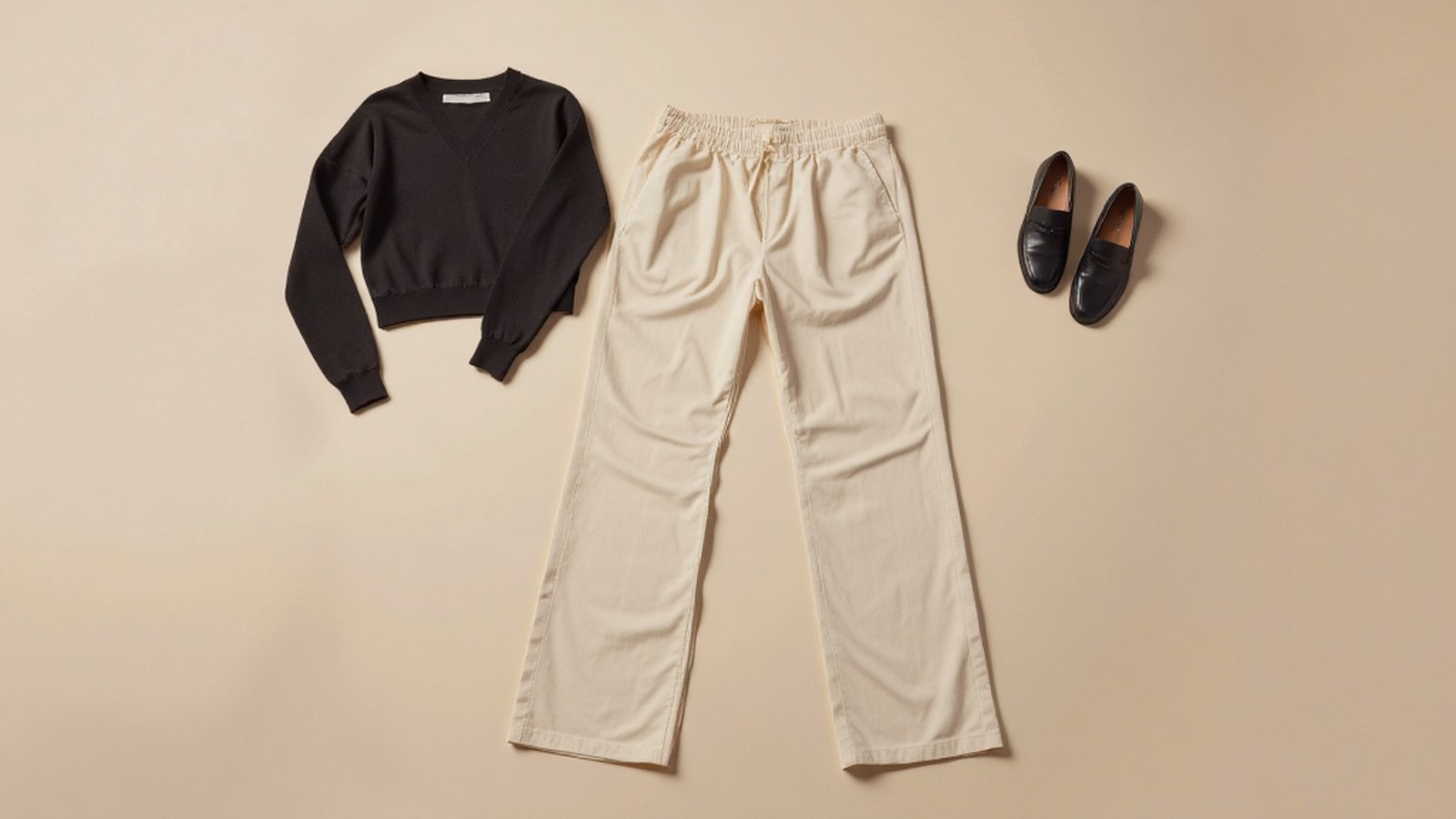
Wide-leg trousers have a reputation for being difficult, and the reputation is deserved — but not for the reason people think. They are not unflattering. They are unforgiving of proportion errors, because the volume exaggerates whatever the top and the shoe are doing.
Get three things right — the rise, the length and the top — and wide-leg trousers are the easiest way to look taller and more deliberate than you are.
What makes a wide leg work
The rise. A high or at least mid rise is the difference between "trousers" and "a skirt with a split". The volume needs to start at the waist, not the hip, or the whole garment hangs from the widest part of your body.
The drape. A wide leg should fall in a line, not stand away from the body. Look for a fabric with weight: wool crepe, a heavy cotton twill, Tencel blends, good denim. Stiff, thin fabrics flare out at the knee and read as a costume.
The length. Full-length, ideally just clearing the floor in the shoes you will wear. A cropped wide leg is a different, harder garment — it cuts the leg at the ankle and makes the shoe the focal point.
The pleat, if any. A single pleat adds room at the hip and a crease down the leg, which reads as tailored. Multiple pleats add volume everywhere and demand a very close-fitting top.
The one-volume rule
The top and the trousers cannot both be oversized unless you are deliberately building a column.
| Top | Trouser | Result |
|---|---|---|
| Fitted knit, tucked | Wide, high-rise | Long legs, clean line |
| Cropped top ending at the waist | Wide | Balanced, more casual |
| Oversized shirt, half-tucked | Wide | Relaxed, needs a heel or a heavy shoe |
| Oversized knit, untucked | Wide | Blocky — only works with a very long coat |
The most reliable combination is a close-fitting top tucked in, with a belt that matches the trouser or the shoe. It gives the eye a waistline to work from, which is what stops the volume reading as width.
Worth knowing
If you dislike tucking, a cropped knit or a bodysuit does the same job. The goal is not the tuck itself — it is that the top's hem ends at the waistband rather than at the hip.
The shoe is the hinge
The single biggest variable in whether wide-leg trousers look good is the shoe. Because the hem is wide, the shoe determines whether the leg line continues or stops.
- A loafer or derby with a substantial sole: continues the line, works for work.
- A boot that fits under the hem: warm, clean, slightly formal.
- A chunky sneaker or platform: adds height and weight, good with denim.
- A pointed flat: elongates, but is easily hidden by the hem.
- A delicate sandal: disappears, which makes the trousers look like they are floating.
- Ecru#F1E8DA
- Mid blue#55708C
- Charcoal#33312E
- Cognac#8B5A2B
- Ink#1C1917
Length and hem, precisely
Measure in the shoes you will actually wear. The hem should:
- Clear the floor by 0.5–1 cm at the front, so it does not drag.
- Fall straight, not pool. A puddle of fabric at the ankle shortens the leg.
- Show the shoe at the toe, not the whole shoe.
If you are between lengths, go longer and have them hemmed. A too-long wide leg can be fixed; a too-short one cannot.
What goes wrong
- A long top over wide trousers. The hem lands at the widest part of the hip and the outfit becomes a rectangle.
- A cropped wide leg with an ankle sock. Three horizontal lines in 10 cm.
- A thin fabric with a wide cut. It clings at the knee and flares at the hem.
- A very low rise. The volume starts at the hip and the leg looks shorter, not longer.
- A tiny bag on a long strap over a wide outfit — it reads as out of scale. Scale the accessories to the trousers.
Petite and tall: two adjustments
The rules do not change with height, but the numbers do.
If you are petite: keep the rise high and the length full. A cropped wide leg will cut you at the ankle and make the hem the widest point of the outfit. Choose a fabric with a clean vertical fall and avoid large pockets, which add width at the hip.
If you are tall: you have room for a lower rise and a wider leg, but watch the length — most "tall" sizes still stop short. Buy the longest inseam available and have it hemmed, and choose a shoe with a little heel or platform so the hem clears the floor.
Either way, one detail does most of the work: a vertical crease down the front of the leg. It is the cheapest way to make a wide trouser look tailored rather than theatrical.
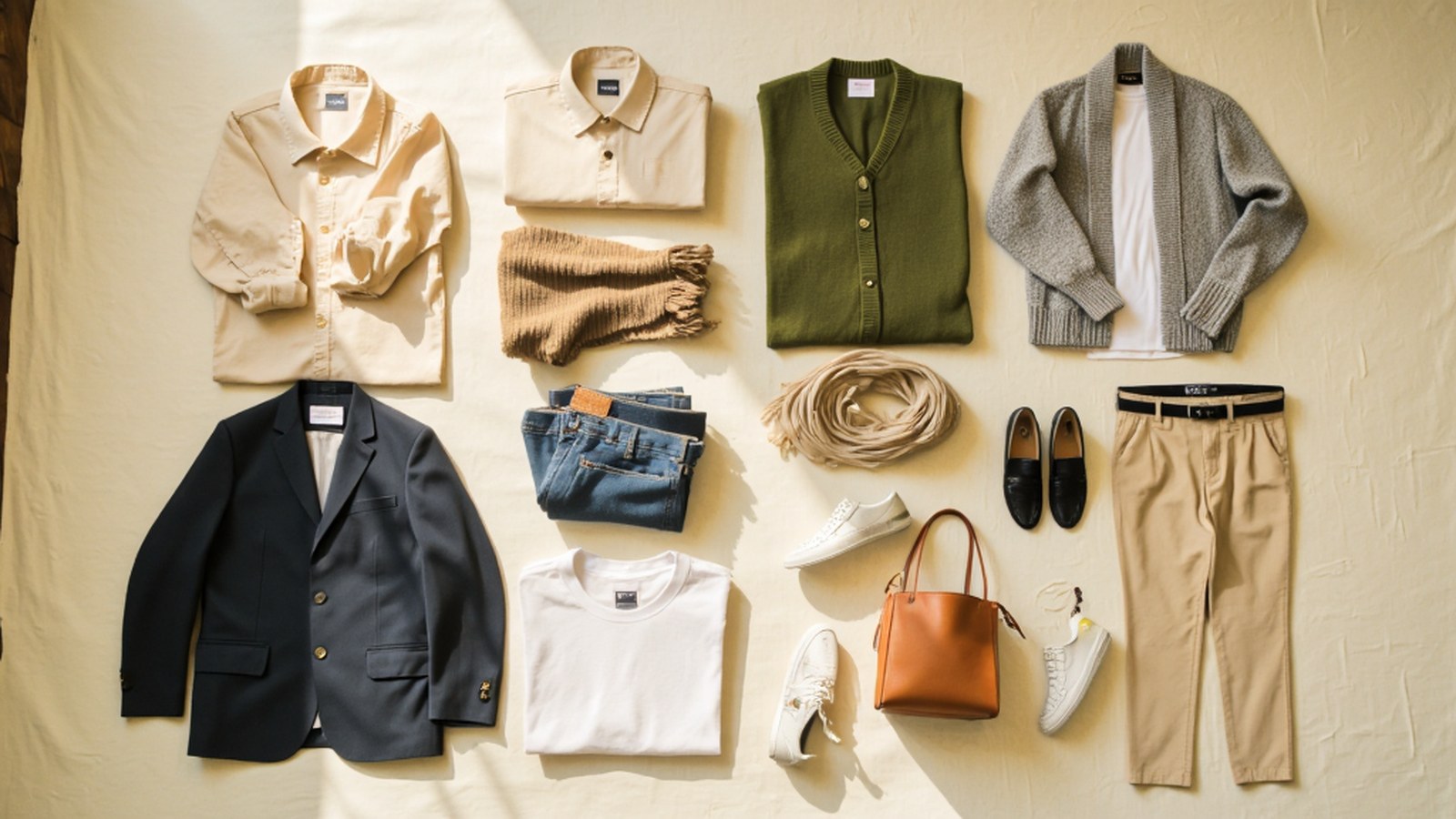
Three outfits that work
The formula
- Work: high-rise wool-blend wide leg in charcoal, fine merino crew tucked, leather loafer, structured tote
- Weekend: wide-leg denim, heavyweight tee half-tucked, chunky sneaker, cropped jacket
- Evening: black crepe wide leg, fitted knit, pointed flat, small shoulder bag
The short version
Choose a high rise, a heavy fabric that falls in a line, and a full length measured in your shoes. Keep the top close to the body or cropped at the waist, and wear a shoe with enough weight to continue the hem. Do those four things and wide-leg trousers stop being difficult.
Frequently asked
What shoes go with wide-leg trousers?
A shoe with some weight: a loafer, a chunky-soled flat, a boot, or a pointed flat if you want length. A delicate ballet flat disappears under the hem and makes the leg look shorter.
Can short people wear wide-leg trousers?
Yes — full-length, with a high rise, a top that ends at the waist, and a shoe that continues the trouser colour. The hem should nearly touch the floor, not end at the ankle.
Should wide-leg trousers be high-waisted?
Usually yes, because a higher rise lengthens the leg and holds the volume at the waist rather than the hip. Low-rise wide legs work only with a very short top.
Can I wear them to the office?
Yes, in a wool blend or a crepe with a crease, paired with a knit and a loafer. Denim wide legs are a weekend call unless your office is relaxed.